
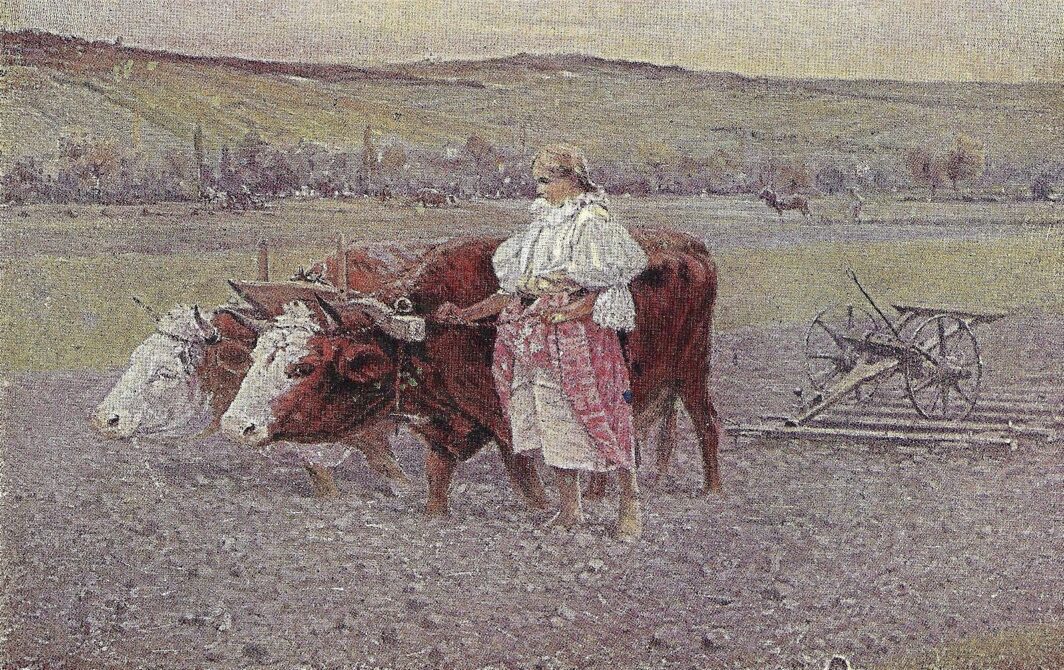
Mailed or not, these postcards served as a distribution network for aesthetics, a way for outwardly-oriented visual artists to inject their ideas directly into culture, engaging with the world at large.”
–Kyle Chayka, Hyperallergic
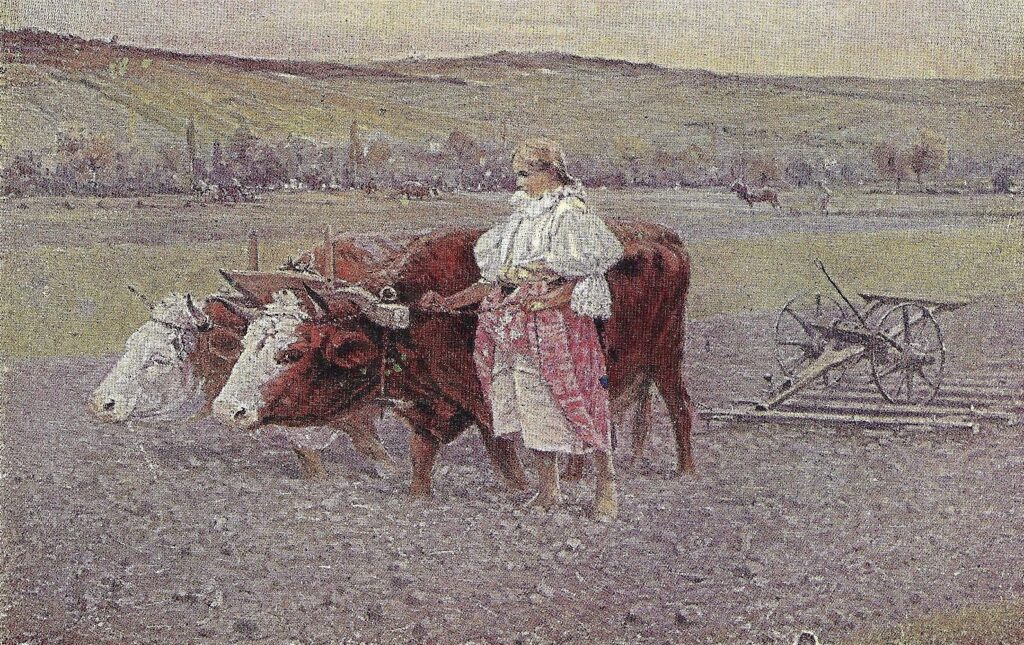
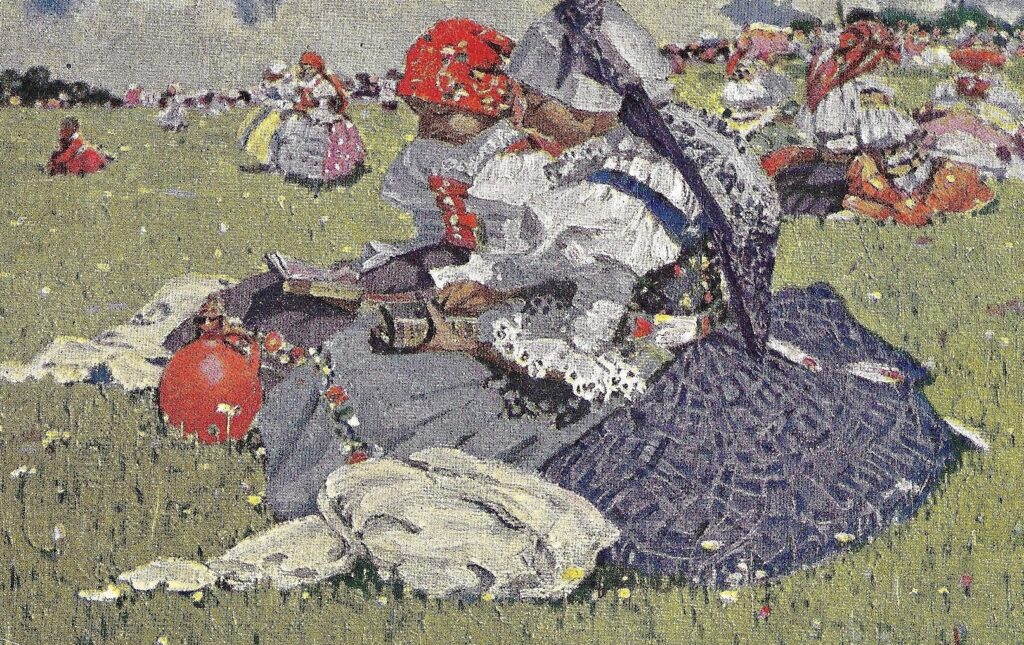
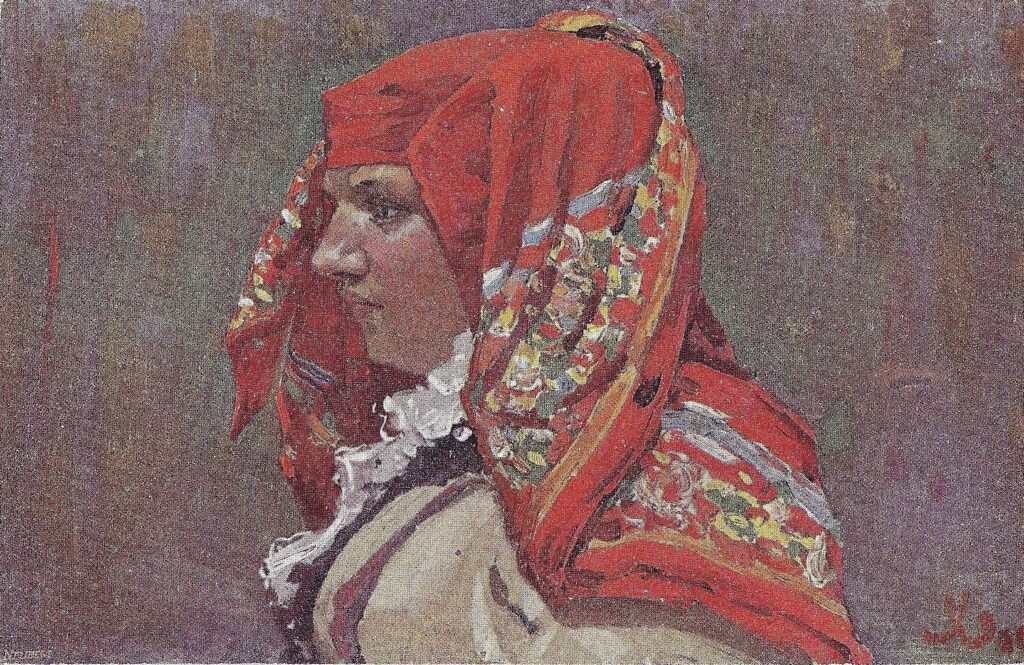
Postcards allowed images to move quickly and cheaply across borders, circulating ideas well beyond galleries and private collections. For artists whose work was oriented toward the public sphere, postcards offered a way to integrate visual culture directly into everyday life. In the case of Joža Uprka, postcards reproduced from his paintings became a crucial, often overlooked, extension of his artistic career, expanding both the reach and significance of his work.
Elevating the Peasant
Marta Filipová’s insights are especially useful for understanding why this elevation mattered historically, as she situates folk art within a moment of cultural transition within Czech modernism. Folk art represented nostalgia for a pre-industrial past, served as an ideological tool of nationalism, and was even dismissed as a redundant relic for some (Filipová, National treasure or a redundant relic: the roles of the vernacular in Czech art, RIHA Journal, (2013).
Filipová challenges the notion that modernism in Central Europe represented a clean break from vernacular or national traditions. Instead, folk art played a central role in shaping modernism itself. Uprka’s paintings demonstrate that modernism in the Czech lands was not a straightforward embrace of cosmopolitanism, but rather a negotiation between international artistic currents and local traditions. Both his paintings and their postcard reproductions challenge the conventional opposition between folk art and high art by revealing how vernacular culture could underpin modern artistic expression.
At a moment when regional customs such as the kroj were beginning to disappear due to rapid industrialization, Uprka sought to preserve and elevate them. By reproducing his own work into the form of postcards, he inadvertently amplified this effort.
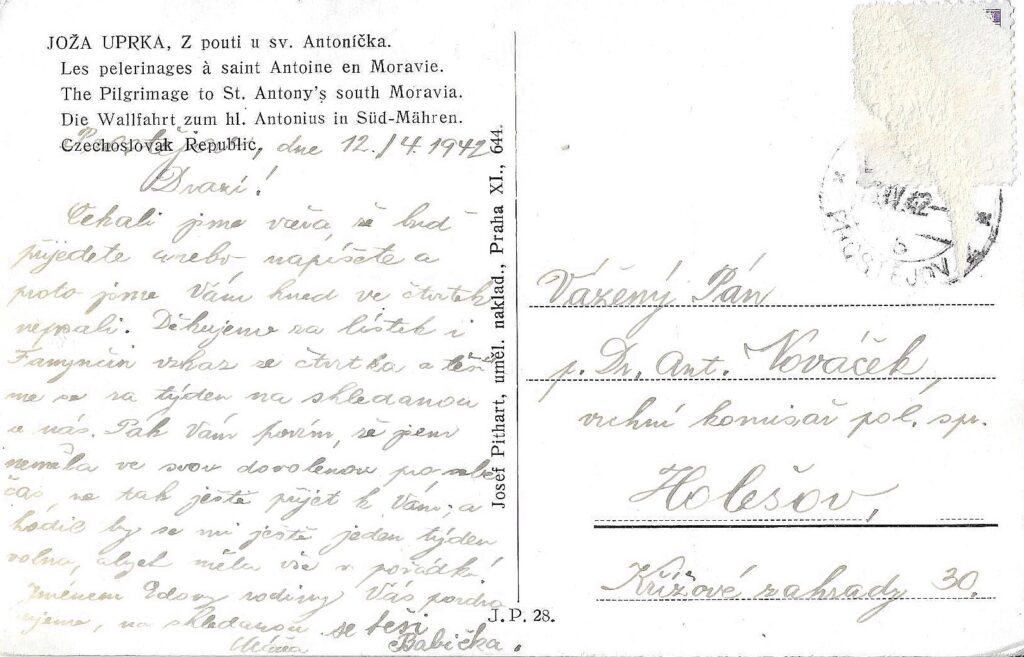
Translation: Dears! Yesterday we expected you to either come or write, which is why we didn’t write to you on Thursday. Thank you for the card and Fanyna’s message from Thursday, and we look forward to seeing you next week. Then I’ll tell you that I didn’t have time for myself during my vacation, nor did I have time to come to you; and I would have liked one more week off to get everything in order! On behalf of Idovy’s family, we send you greetings, Grandma is looking forward to seeing you
Accessibility and National Participation
Essentially, postcards democratized access to Uprka’s work. While few people could afford an original painting, many could purchase a postcard reproduction, and in this way, Uprka’s art reached the very population it depicted. The postcards allowed common people to participate within the visual culture of national identity, reinforcing a shared sense of tradition through an affordable and familiar object.
Folk culture was treated as a reservoir of residual knowledge from the past—knowledge seen as essential not only to national memory but to its future (Filipová). Postcards were ideally suited to this project. Their portability and reasonable cost allow images of Moravian folk tradition to travel throughout the country.
Uprka’s postcards therefore should not be understood as secondary or merely reproductive objects. They acted as agents in the cultural life of their time, mobilizing images of folk tradition to enhance national awareness while participating in broader modernist networks of image circulation. By bridging fine art and everyday use, the postcards show how Uprka’s work was both preservational and participatory.
Why Postcards Matter
Not everyone embraced the translation of fine art into postcard form. The artist Zdenka Braunerová, for example, criticized the process of reproducing original works as postcards, arguing that the available reproduction techniques were neither sufficiently artistic nor faithful to the originals.
Despite such objections, the widespread distribution of Uprka’s postcards significantly contributed to his growing popularity across the Czech lands. As the images circulated, so did his reputation, reaching audiences far beyond Moravia. The addresses preserved on surviving postcards—including destinations such as Prague, Pardubice, Brno, Zlín, and other Moravian towns—attest to the geographic variety of this circulation. Increased visibility, however, also carried risks. Uprka’s popularity created conditions for imitation and forgery, complicating distinctions between original works, authorized reproductions, and derivative copies.
Regardless, the postcards extended Uprka’s vision beyond the canvas, transforming representations of peasant life into shared cultural currency. In doing so, they preserved disappearing traditions, elevated folk art within a modernist discourse, and made national imagery accessible to a wide public. Uprka’s postcards remind us that modernism was not confined to museum or gallery spaces, but were found in the hands of the very people he represented.