
Introduction
The Christian faith has presided over Moravia for centuries, shaping the region through various religious movements. Its roots trace back to the 9th-century Greek saints Cyril and Methodius, who introduced Christianity to the Slavic peoples. The Czech lands—Bohemia, Moravia, and Czech Silesia—later became a cradle of early Protestant thought, nearly a century before the Protestant Reformation. These teachings were first introduced by Moravian-born Jan Hus (d. 1415), who inspired the Hussite movement that continued through a period of tolerance until the end of the 17th century.
Moravia returned to a predominantly Catholic faith following the beginning of the Thirty Years War, most significantly following the Battle of White Mountain in 1621. Joža Uprka’s paintings reflect depictions of traditional religious observances and festivals, including Advent, Easter, Pentecost, and pilgrimages dedicated to St. Anthony. His representations of piety are not only evident in his model’s gestures of prayer, but in their traditional attire as well. Worn as their Sunday best, their krojs represent their devotion and joyful celebration. Through his representations of piety, Uprka combines religious ritual with regional identity, suggesting that faith and folk tradition were inseparable facets of cultural life.
Uprka’s paintings, particularly his murals, remain visible throughout Moravia, including the site of his burial in the Church of St. John the Baptist in Kněždub, as well as the City Hall of Uherské Hradiště.
“Dimensions may refer to framed or unframed sizing. Please reach out directly for specific information”
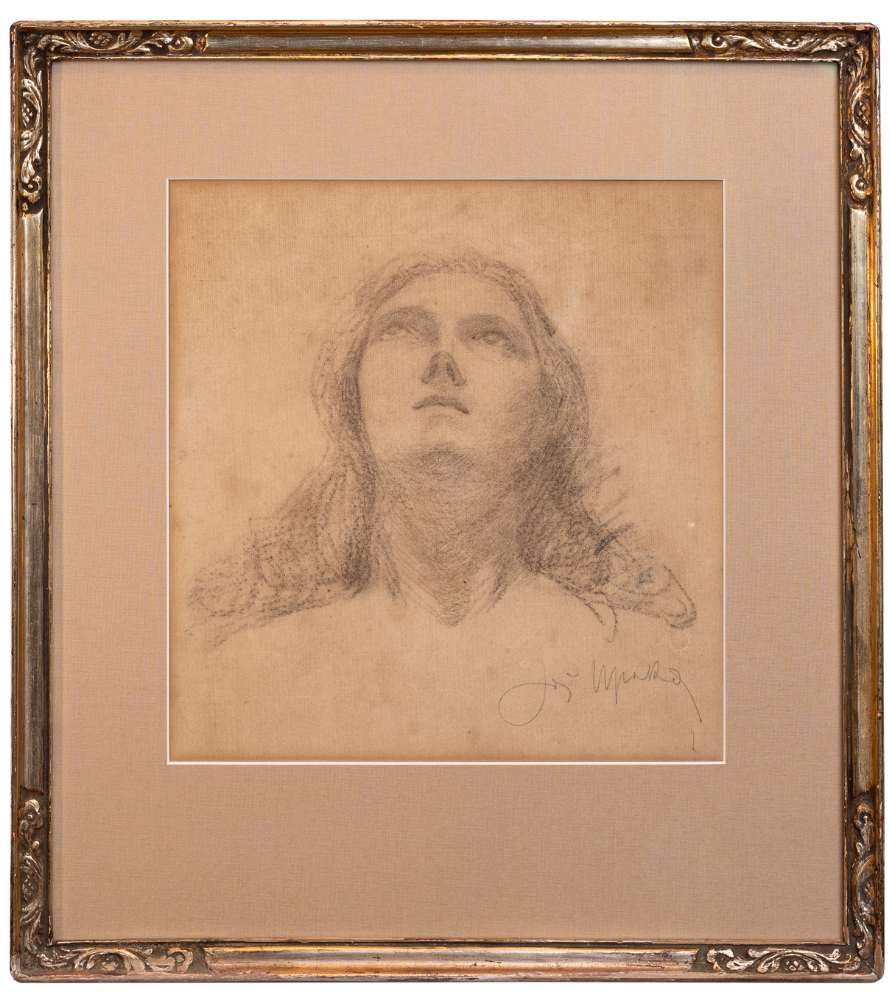
Study of a saint woman, Joza Uprka, Drawing, charcoal on paper, 1883, 24 3/4 x 22 3/4", Signed lower right.
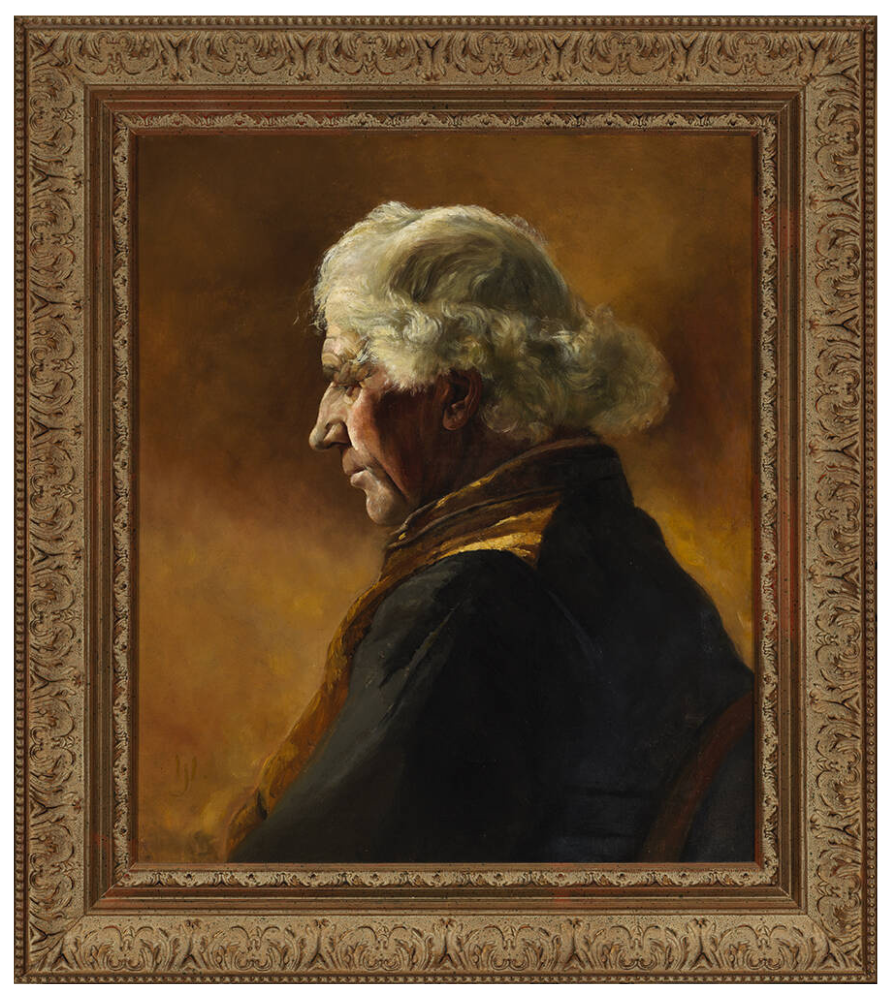
Untitled (Brother Zvolsky, a patron of the artist, Order of the Holy Cross Prague), 1887, Oil on canvas, 22 x 18 1/2"
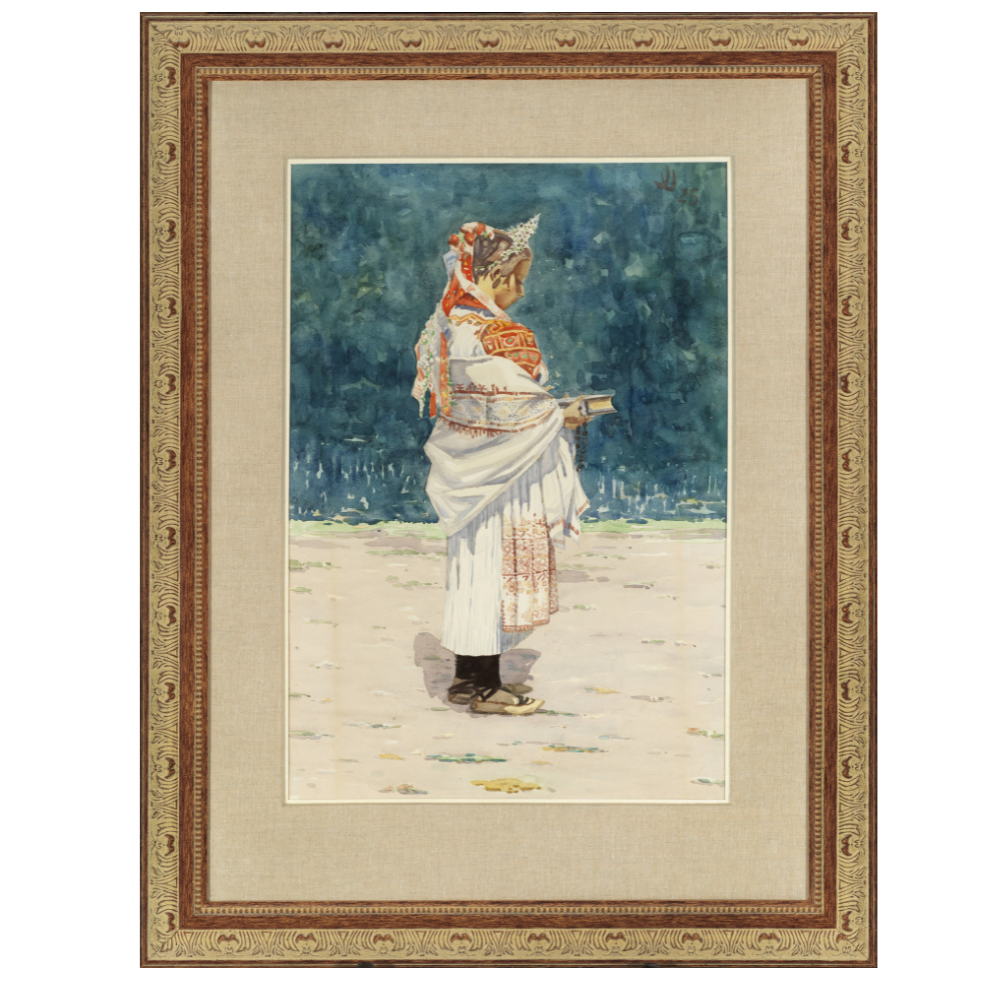
Untitled (A woman in prayer, a study for the Slav Mother of God Tiptych/Slovanska Bohorodica), 1925, Watercolor on paper, 25.5 x 17.5"
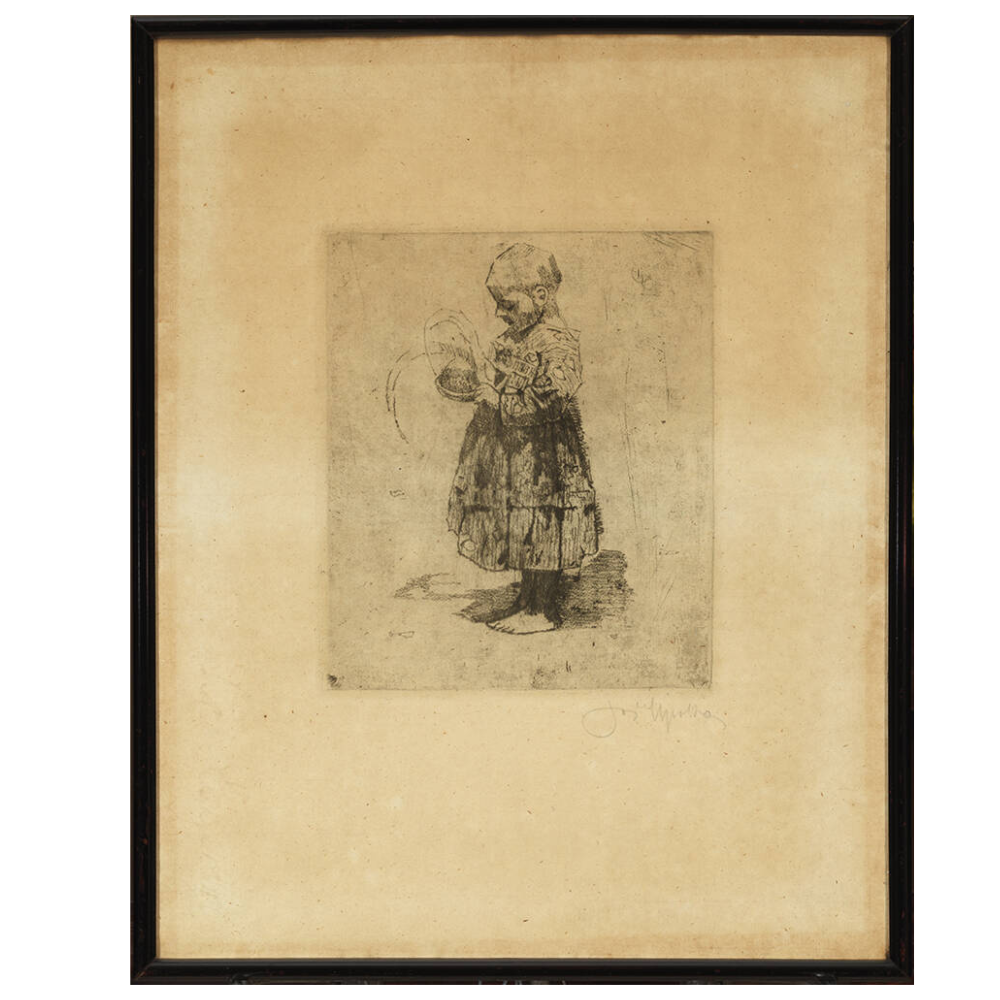
JOŽKA S KOSÁRKY (Uprka's oldest son Josef (Jožka) with new feathers (decoration on his hat - kosárky),1900/1918, Etching on paper, 17 x 13 1/4"
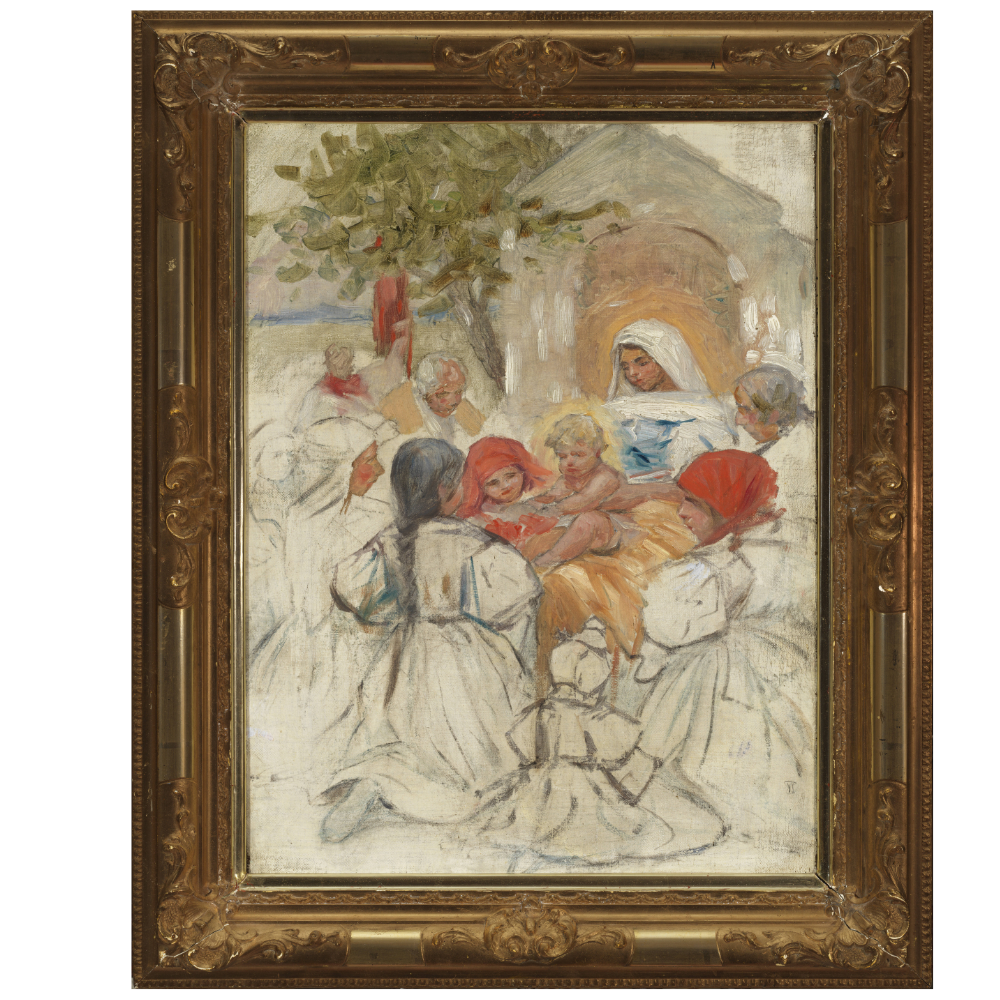
Study for the altarpiece Virgin Mary with Jesus, 1894, Oil on canvas, 19 x 14 inches
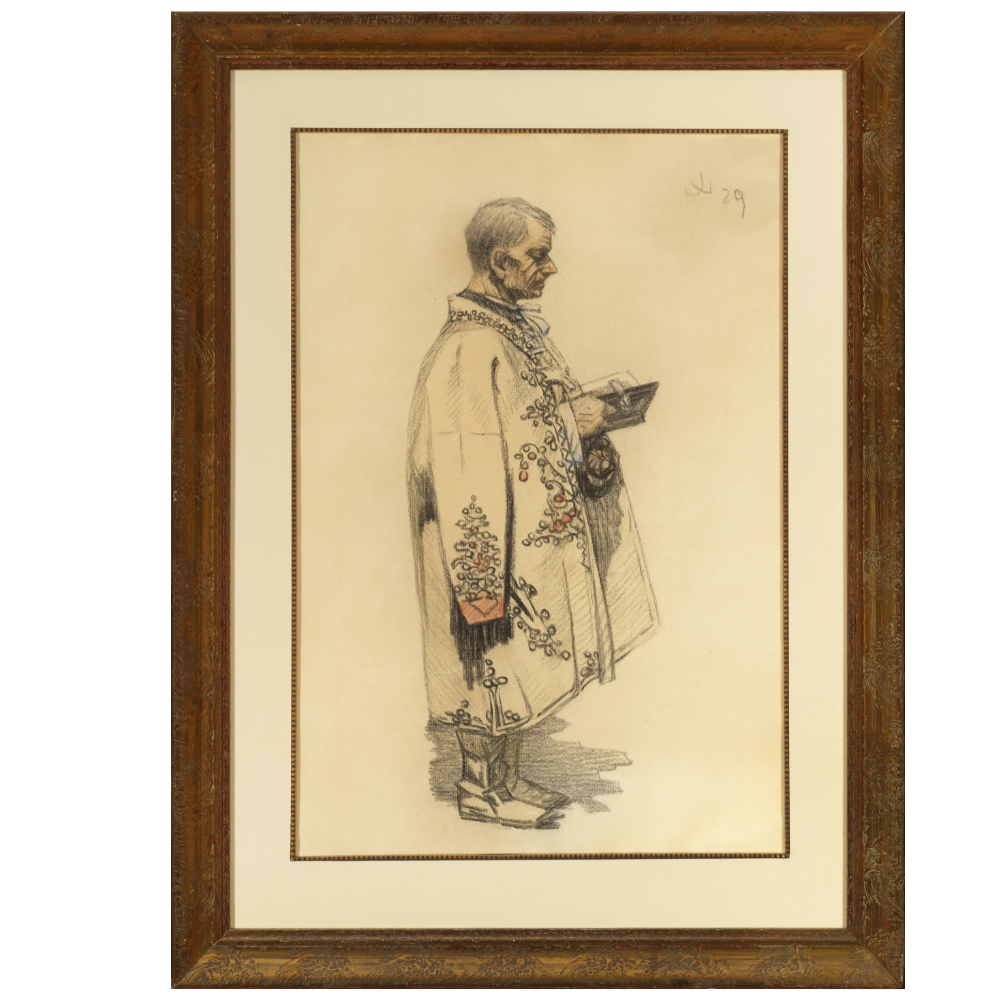
Untitled (A man standing with a religious book, a study for the Slav Mother of God Triptych/Slovanska Bohorodica), 1929, Mixed media and charcoal on paper, 21 2/3 x 15 1/3"
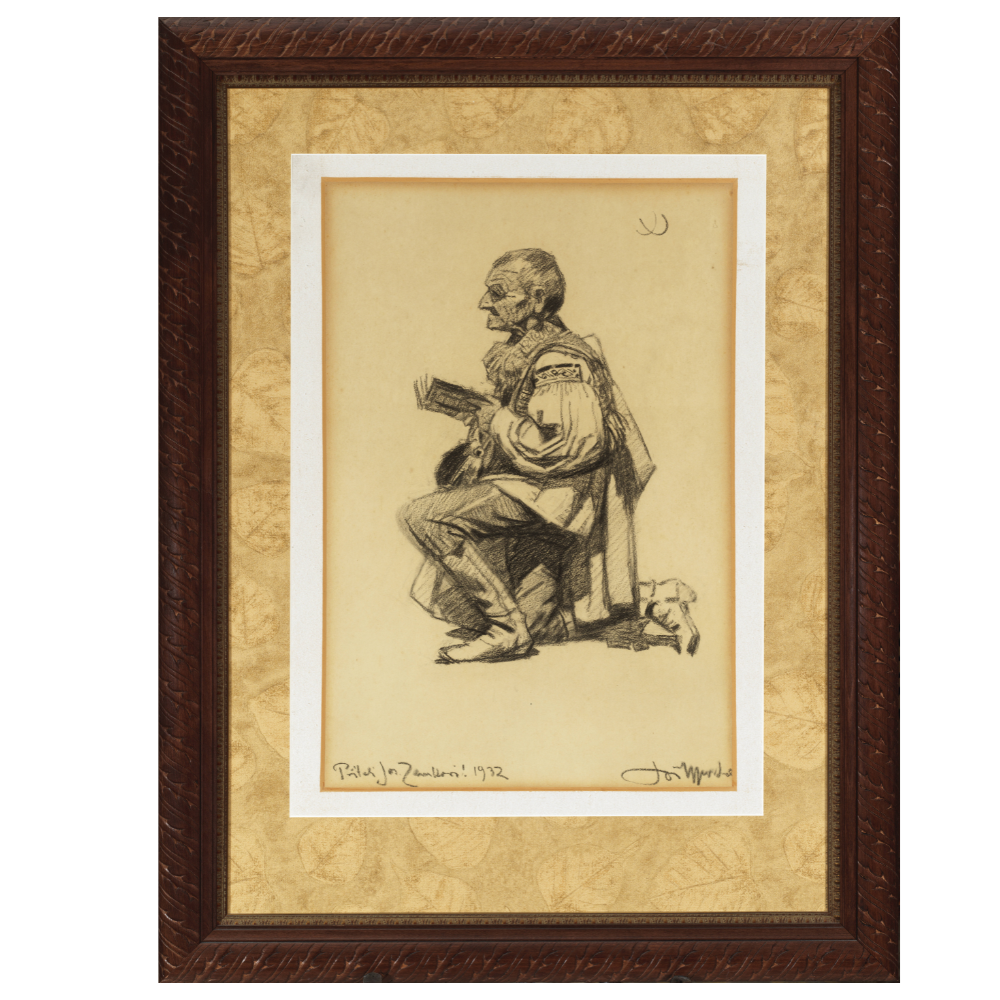
Untitled (a man kneeling in prayer, a study for the Slav Mother of God Tiptych/Slovanska Bohorodica), 1932, Charcoal on paper, 23 x 15"
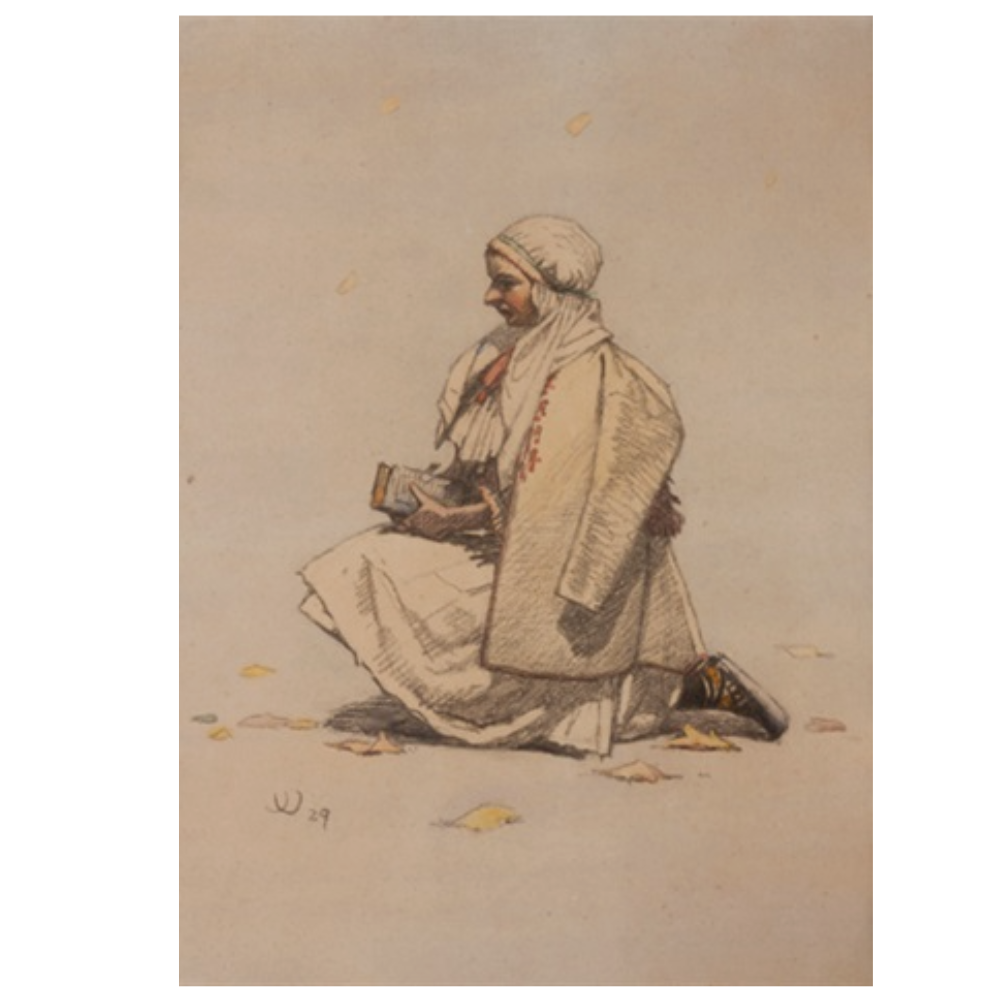
Girl from Myjava Kneeling with Prayer Book, 1929, Charcoal & watercolor on paper, 23 x 16.5"
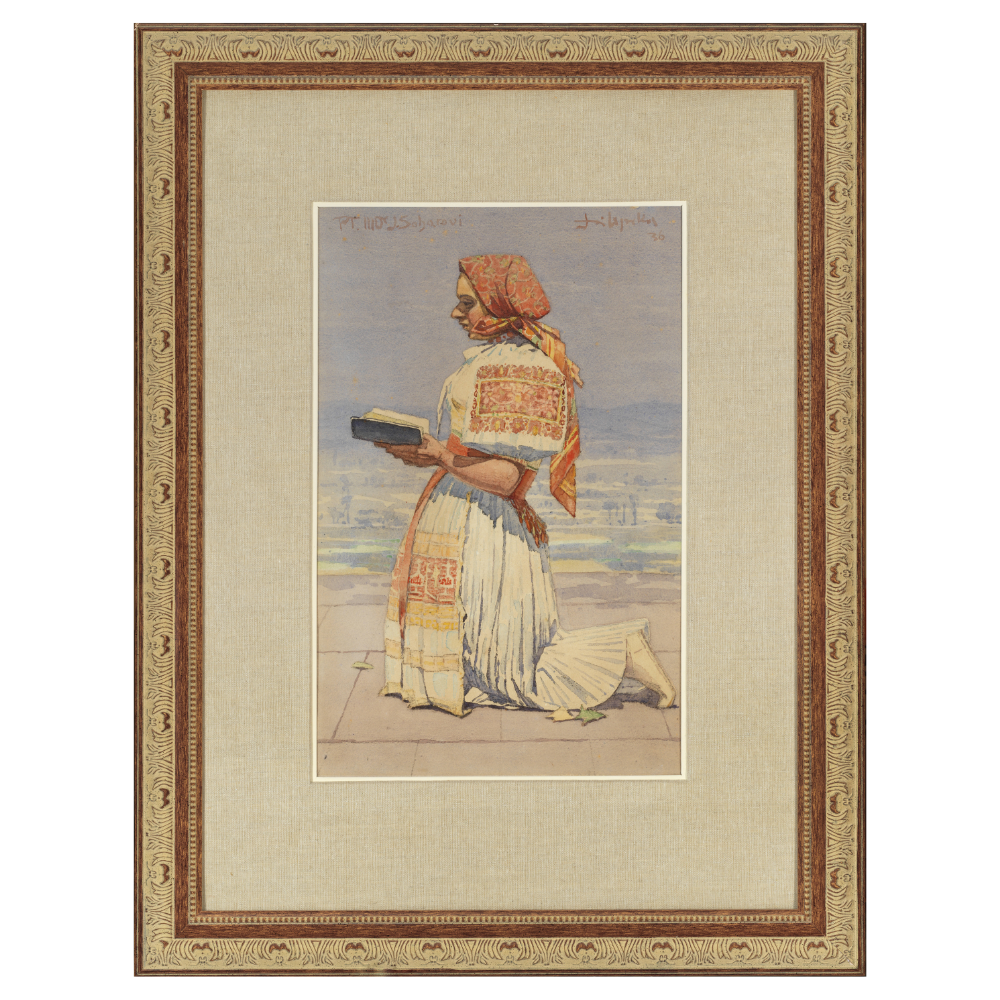
Untitled (A woman kneeling in prayer), a study for the Slav Mother of God Triptych/Slovanska Bohorodica), 1936, Watercolor on paper, 23 1/2 x 15 1/2"
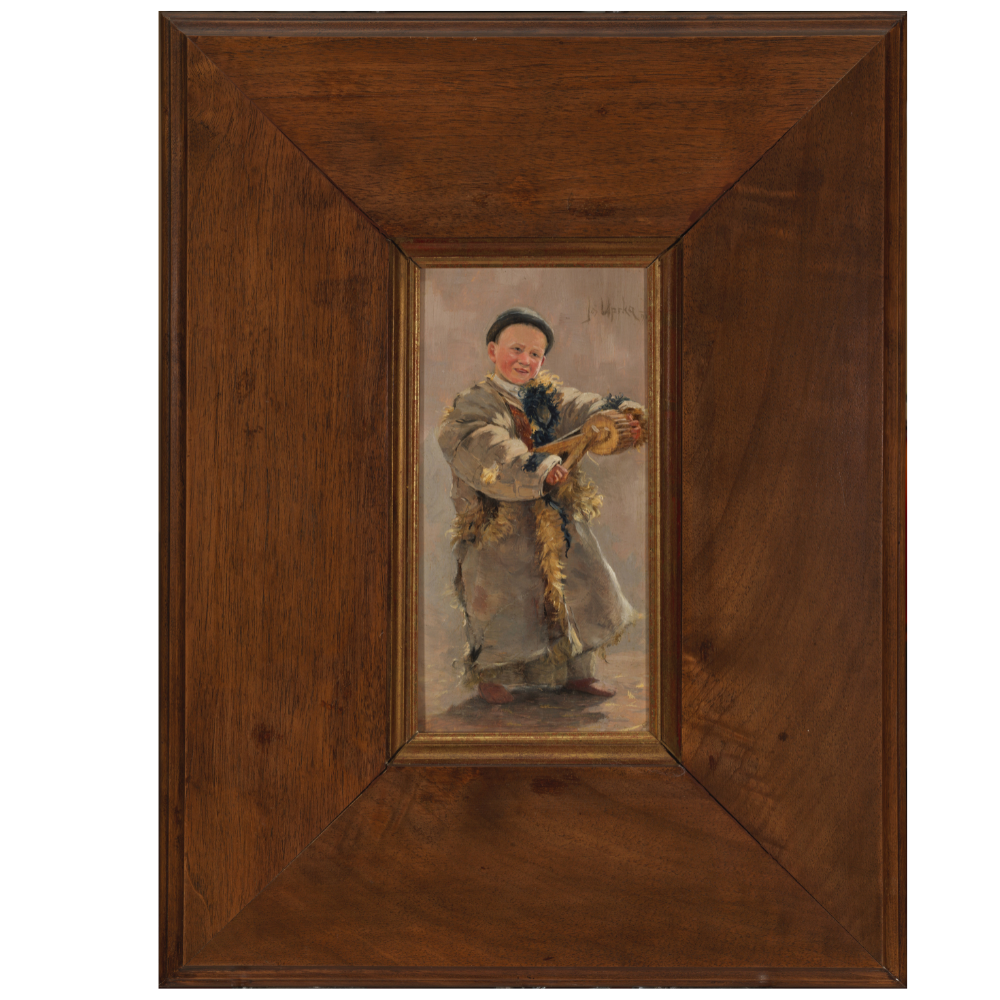
Untitled (A young boy with his Easter rattle/vrzgač, possibly from the Hornacko Region), 1891, Oil on panel,10 x 5.5"
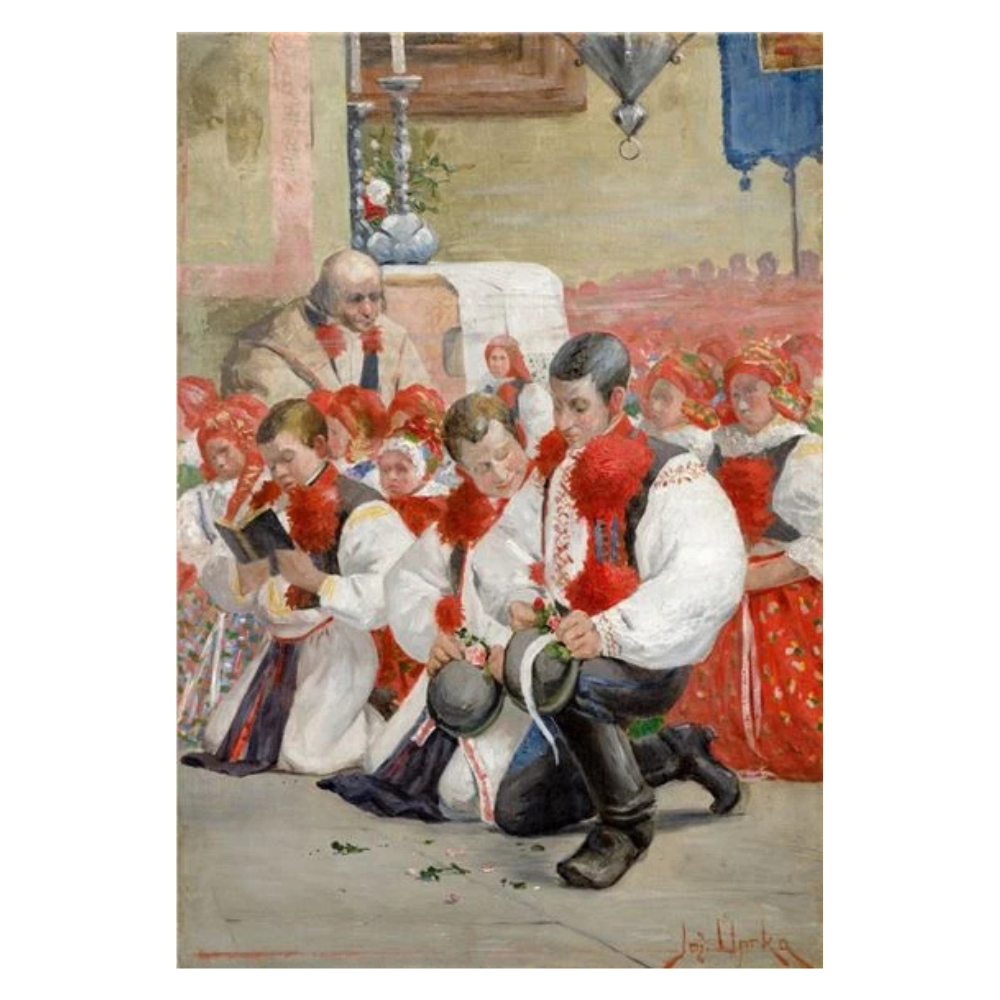
Worship in the Church, 1890 oil on canvas, 59,5 × 41 cm
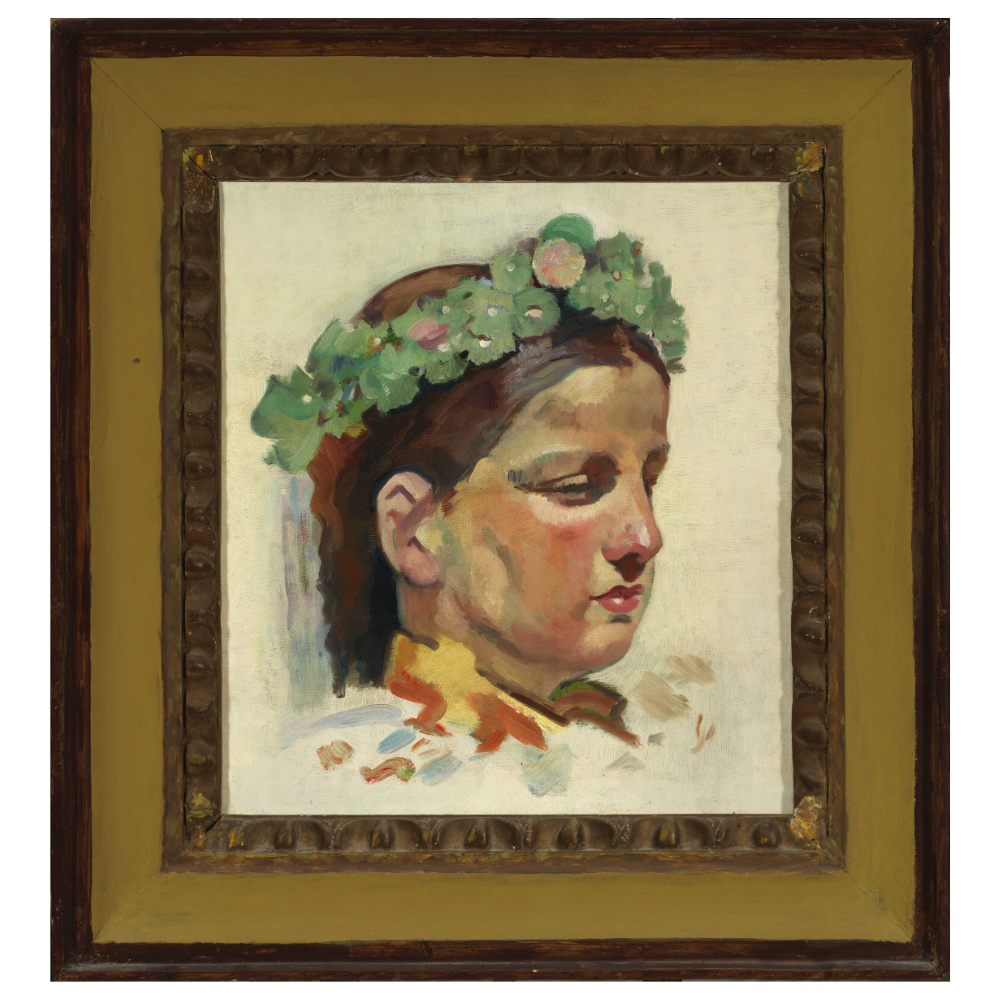
Untitled (A study of a girl at church with Baxus Wreath/ZKostela, Veseli Region, 1894, Oil on canvas, 13 x 12"
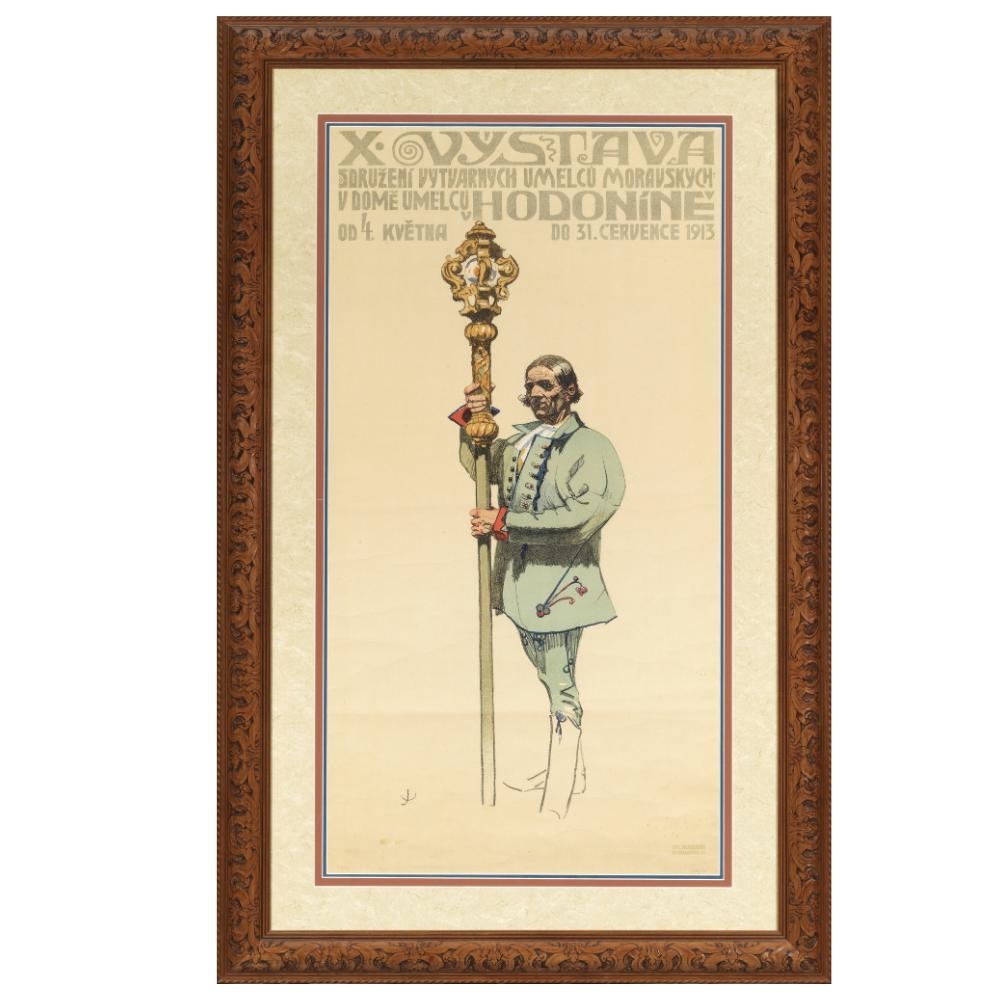
X Vystava (The promotion for the 10th exhibition of the Association of Moravian Artists, Corpus Christi procession in the Hornacko Region, Velká nad Velickou), 1913, Lithograph, 45 x 23"
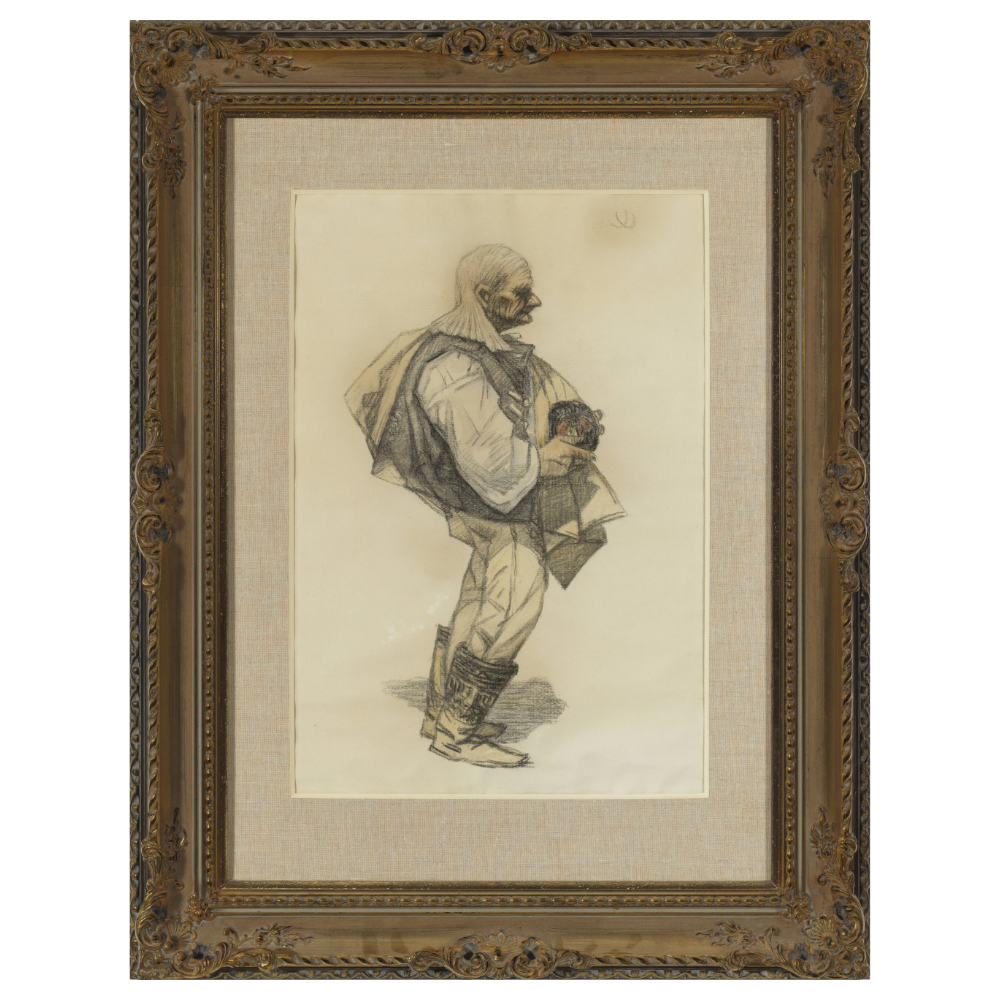
Untitled (Man standing with a coat on shoulder, a study for the Slav Mother of God Triptych/Slovanska Bohorodica), Early 20th century, Mixed media on paper, 20 x 16"
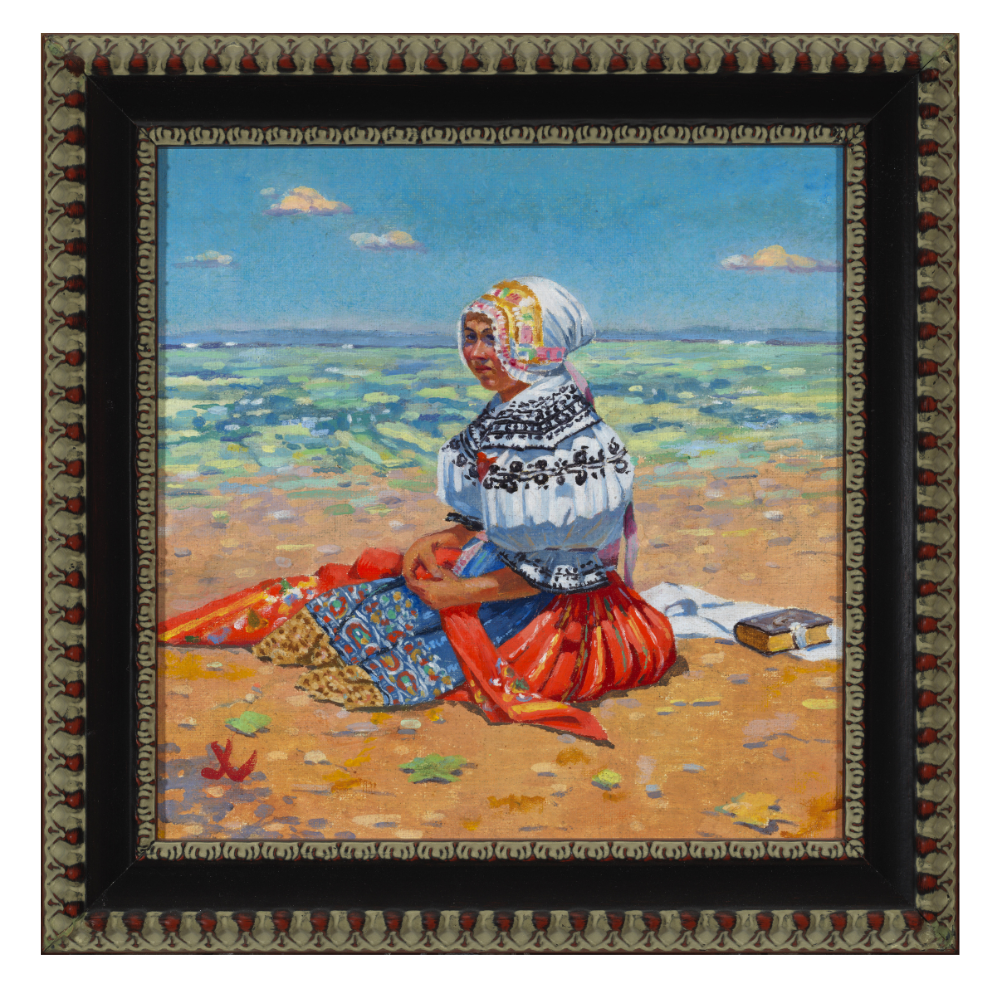
Worship in the Church, 1890 oil on canvas, 59,5 × 41 cm
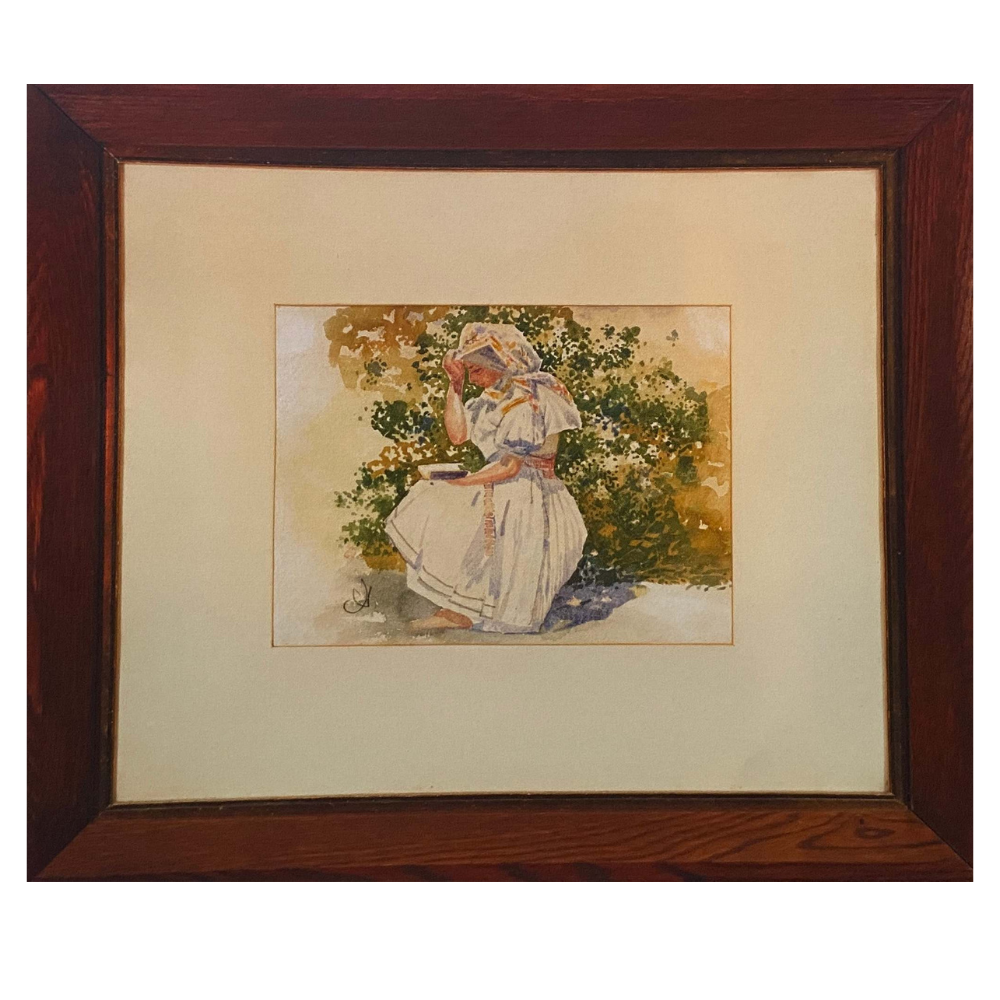
Girl Seated in the Garden with a Prayer Book, 1925 c., Watercolor on paper, 9 x 11 1/4"
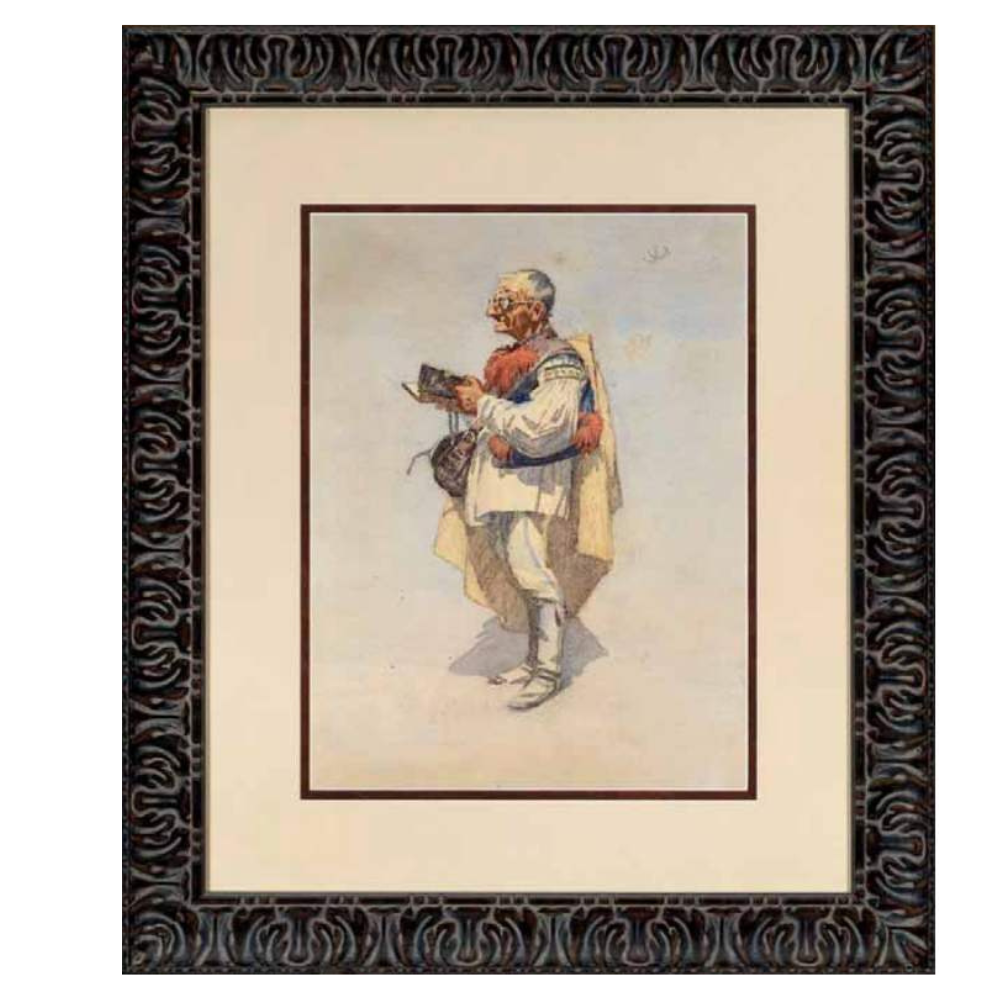
Untitled (An older man from Vlčnov with a religious book, a study for the Slav Mother of God Triptych/Slovanska Bohorodica), Early 20th century, Watercolor on paper, 20 x 16"
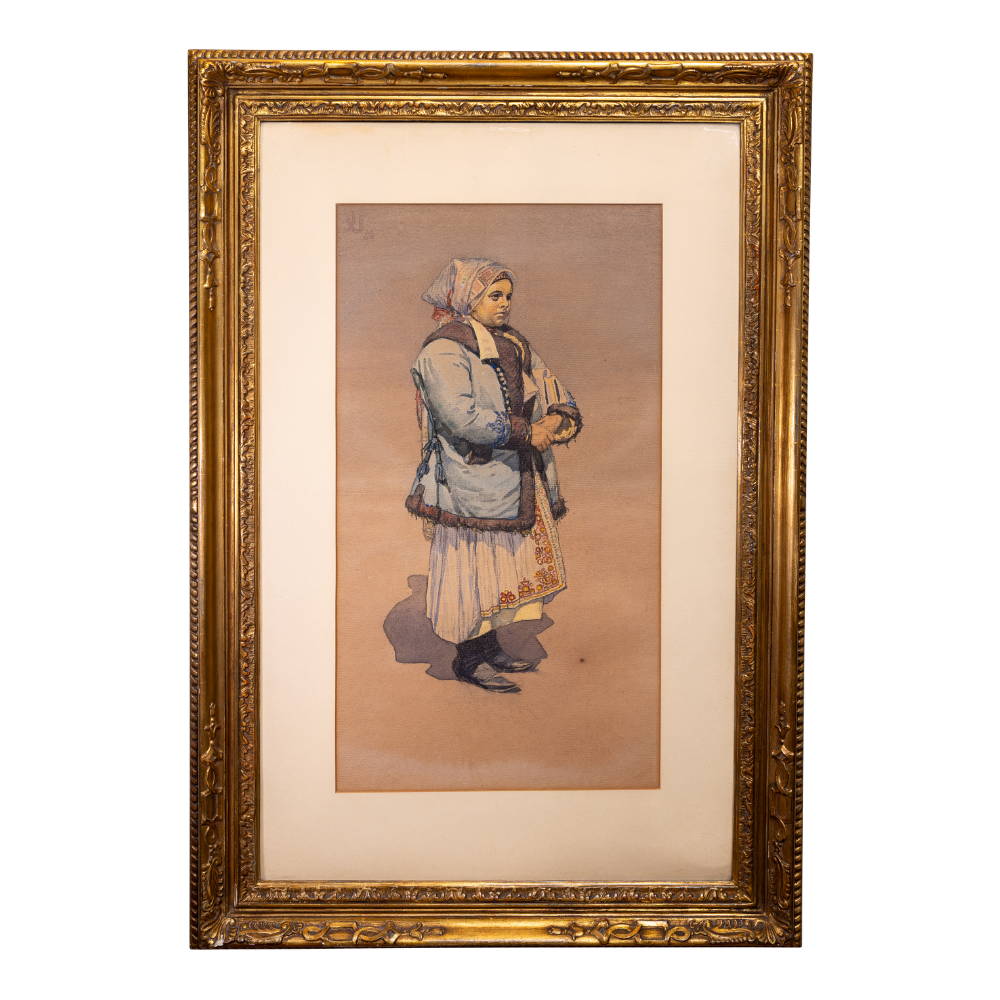
To Church, Joza Uprka, watercolor on paper, 1926, 29 x 16", initialed URC
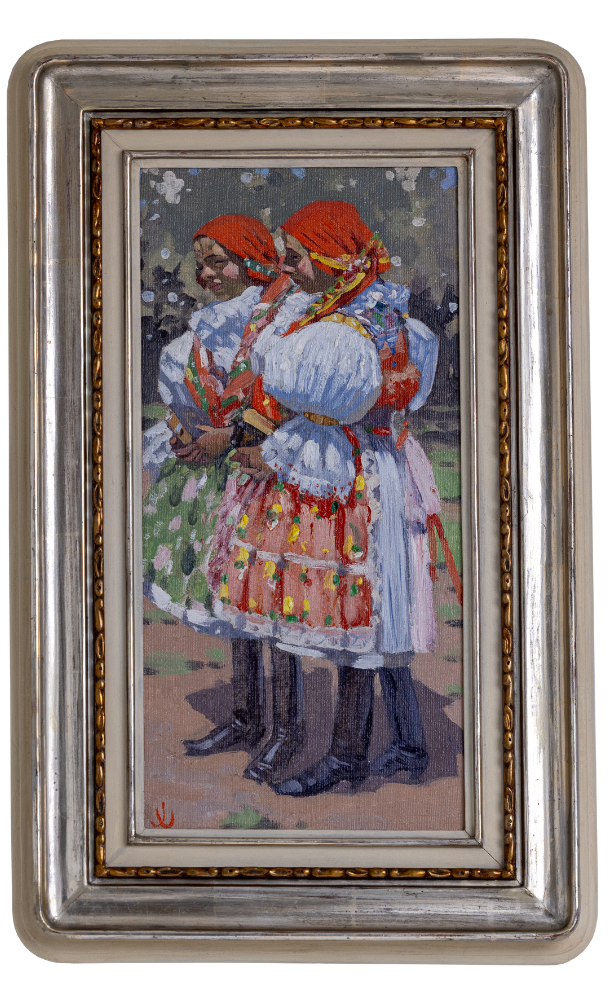
Two Girls to Church, oil on canvas, 24 1/2 x 15 1/4"
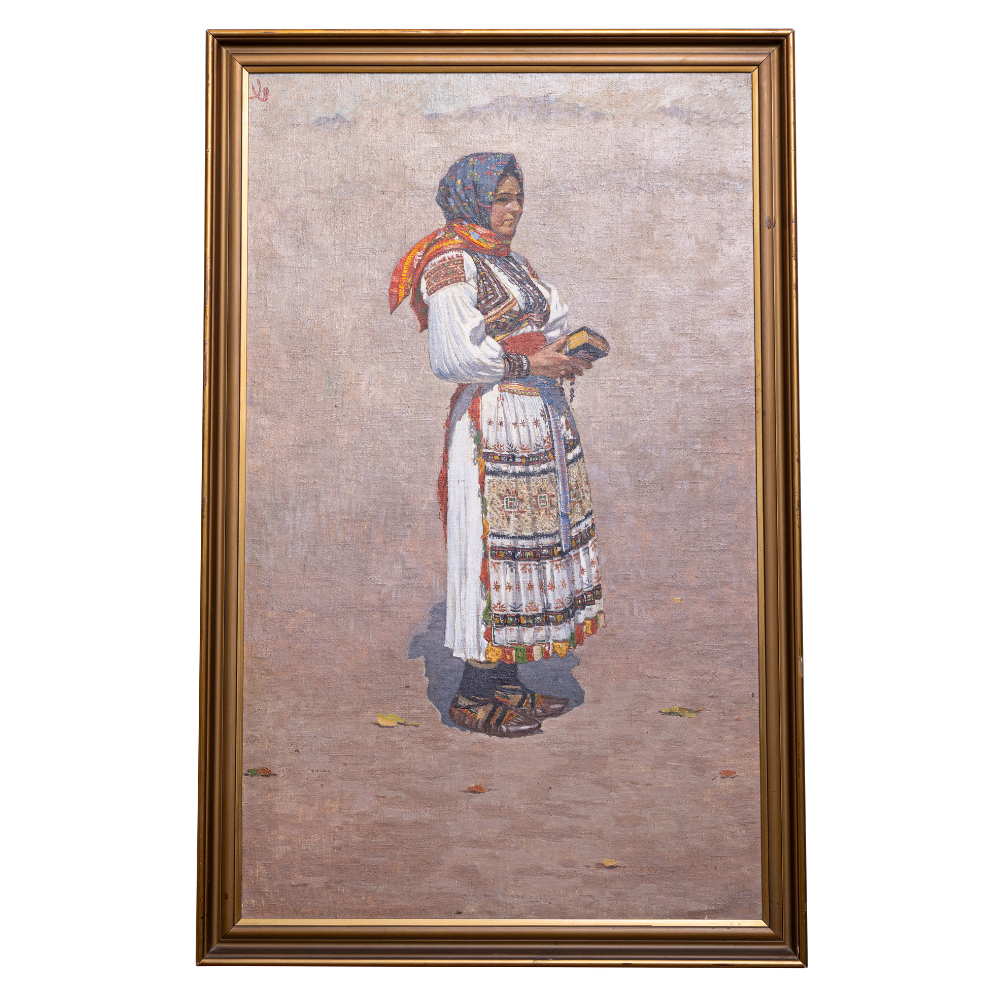
Woman from Hrozenkov, oil on canvas, 1927, 42.5 x 27.5"