
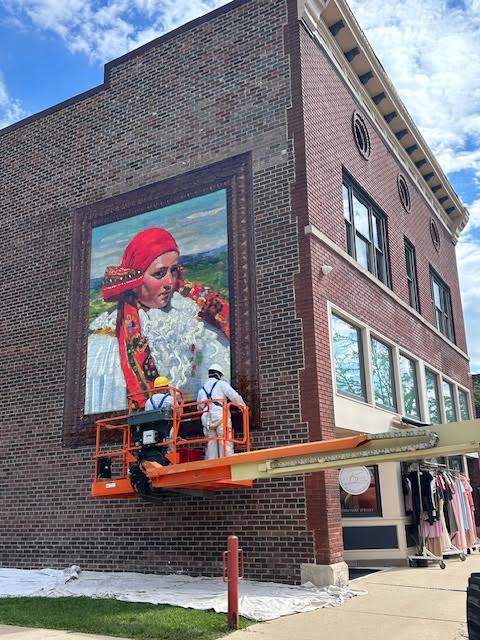
After a nearly five-and-a-half-month run, The Soul of Moravia: Joža Uprka Reprised came to a close on Sunday, March 29 at the National Czech and Slovak Museum & Library in Cedar Rapids, Iowa. The exhibition brought together over 120 works from the collection of George Drost, thoughtfully organized into thematic sections that traced Uprka’s engagement with Moravian life, folk traditions, and evolving artistic influences. Among the highlights were vibrant depictions of kroj, pastoral scenes, and celebratory gatherings that collectively underscored Uprka’s commitment to preserving cultural identity during a period of rapid change.
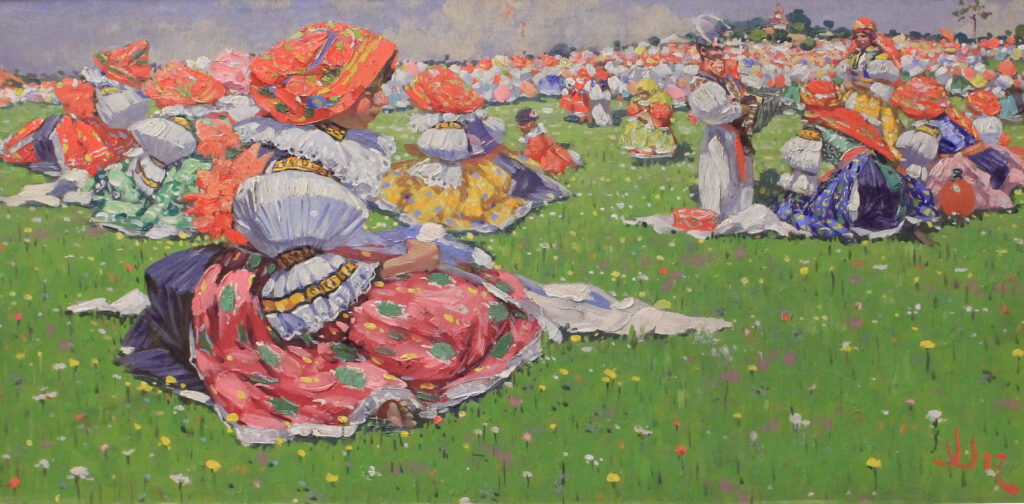
As reported by Elijah Decious in The Gazette, several works in the exhibition carry complex histories, including pieces that were once stolen from the Schnabel family and later reclaimed with the assistance of Drost. Among them is Uprka’s 1917 Pilgrimage of St. Anthony, which Drost ultimately acquired and kept on display in Cedar Rapids. Reflecting on the significance of this history, curator Stefanie Kohn noted that this marks one of the first works exhibited by the museum with a documented history of Nazi-era seizure and restitution.
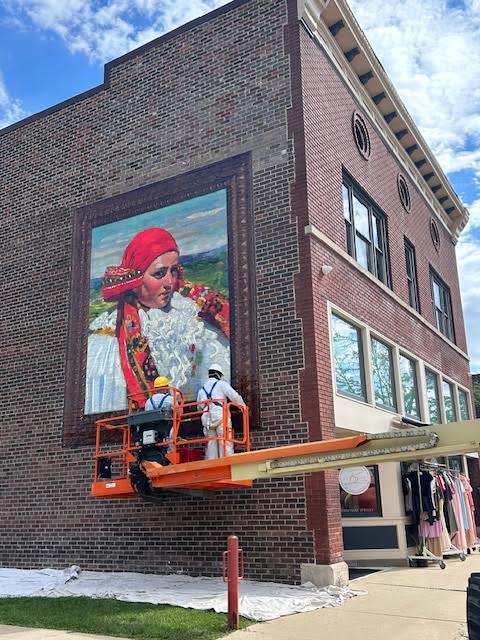
The exhibition was further enriched by a series of public programs. Highlights included the summer unveiling of the Moravian Madonna in Czech Village leading up to the exhibition, followed by a lecture from Drost, who spoke on Uprka’s life and artistic development. In his talk, he explored Uprka’s connections to Moravian culture alongside the formative impact of his time in Paris, where exposure to Impressionism—as well as relationships with artists associated with SVUM and figures such as Alphonse Mucha—helped shape his distinct artistic style.
For those unable to attend in person, the National Czech & Slovak Museum & Library has made select materials available online, including Drost’s recorded lecture and a virtual tour of the exhibition led by Kohn, ensuring continued access to Uprka’s work beyond the gallery walls.
It was truly remarkable to see such a significant body of Uprka’s work brought together and made accessible to the public. Exhibitions of this scale not only highlight the richness of his artistic legacy, but continue to deepen our understanding of the cultural histories his work preserves. Many thanks to the National Czech & Slovak Museum & Library for their thoughtful curation, stewardship, and commitment to sharing this important collection with a wider audience.