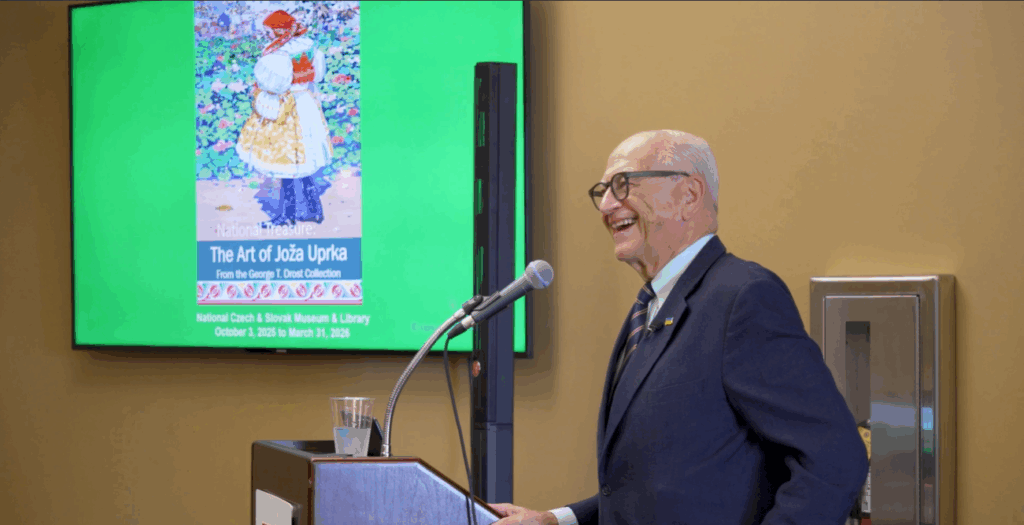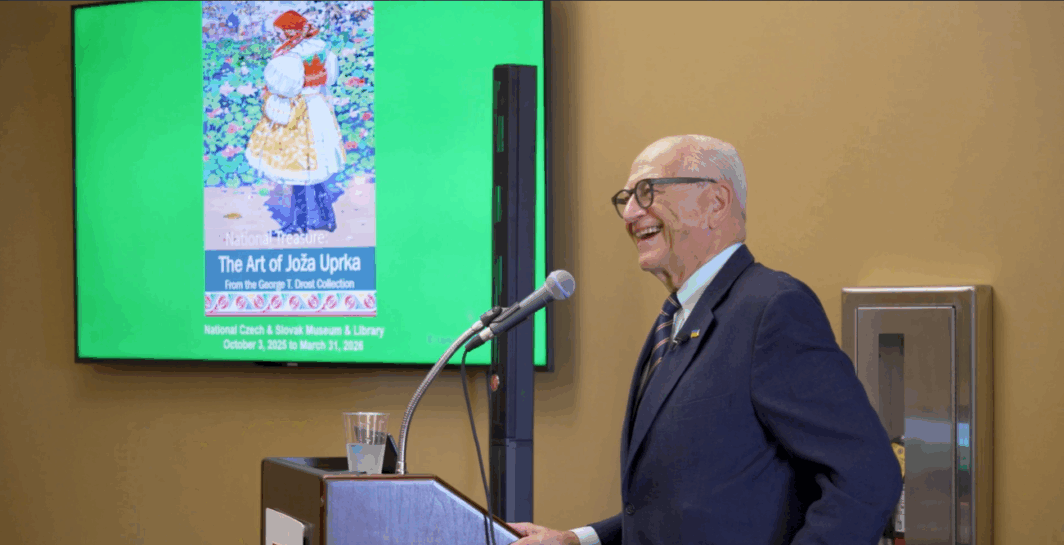
In conjunction with the National Czech and Slovak Museum & Library exhibition, The Soul of Moravia: Joža Uprka Reprised, collector George T. Drost delivered a lecture on the artist’s life, his contributions to the art historical canon, and his distinctive approach to depicting the Moravian people. Drost, who holds the largest collection of Uprka’s work in the United States, traced the artist’s development, from his academic training to his embrace of the Impressionist influences that shaped his mature work after his education in Paris. Uprka blended traditional technique with modern style to immortalize the customer and folk dress of his native region.
Read More: Joza Uprka: National Czech & Slovak Museum Opening (10/04/25)
Drost began by situating Uprka within his artistic milieu. After studying at the Prague Academy of Art, Uprka continued his artistic education in Munich, where he trained with a tighter, more realistic manner typical of academic painting at the time. Marked by darker tonal palettes and structured compositions, Untitled (Brother Zvolsky, a Patron of the Artist, Order of the Holy Cross, Prague) (1887) reflects this influence. Uprka’s later evolution toward brighter colors and freer brushwork, however, reveals the Impressionist influence, a shift that occurred during his scholarship in Paris from 1892-1893.
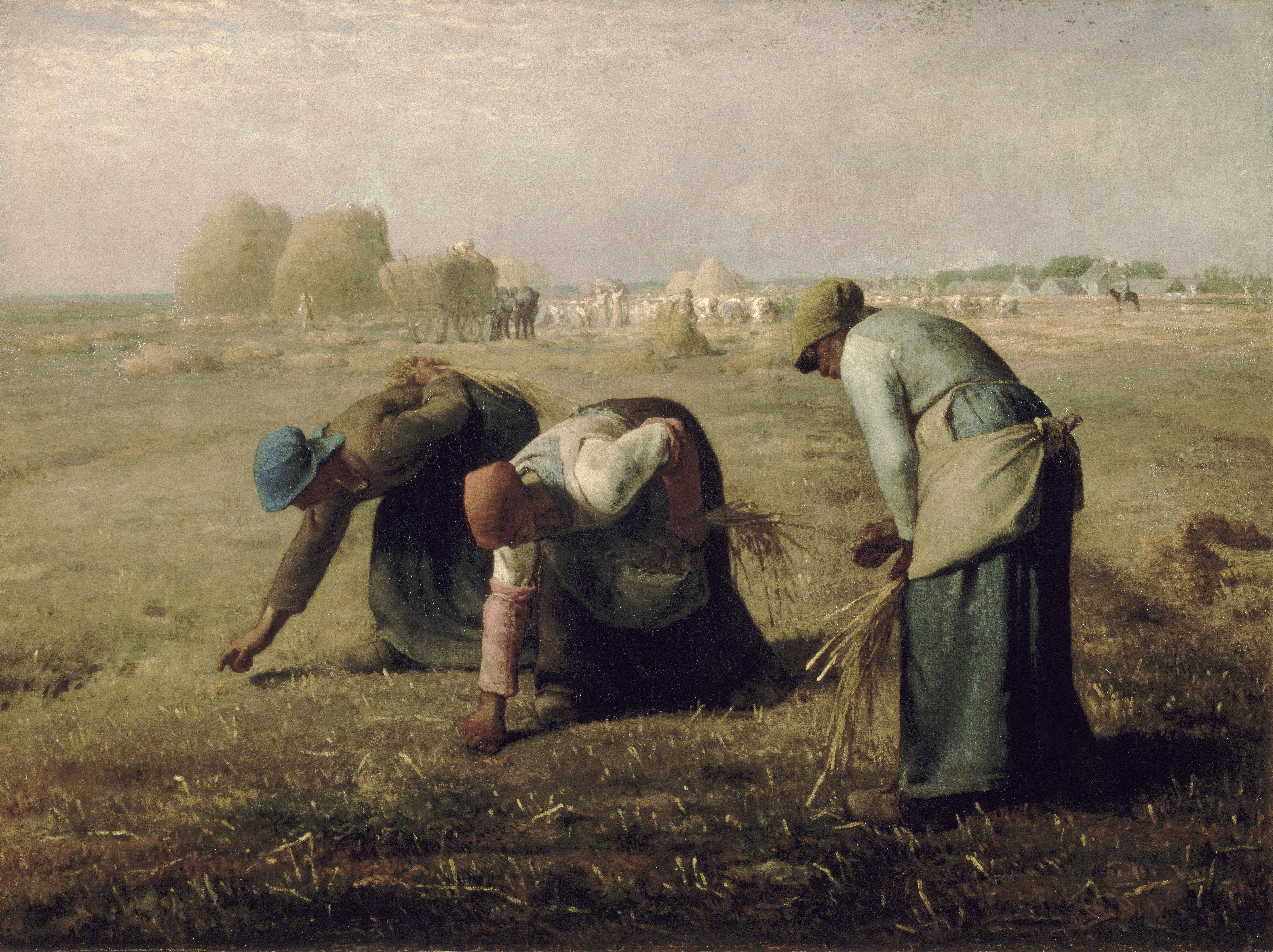
This distinct style was further influenced by family and professional connection, with Drost noting that Joza’s brother, Franta Uprka, had a sculptural practice particularly influenced by Auguste Rodin. Uprka’s artistic network included contemporaries such as Alphonse Mucha, with whom he associated with regularly. Eva Novakova, Uprka’s granddaughter, has even described him as “the Czech Millet,” drawing parallels between Uprka’s depictions of rural life to Jean-François Millet’s iconic portrayals of the French peasantry. Similarly to Millet, Uprka came from a rural background and was committed to representing the people and traditions of his homeland. He diverged from Millet’s muted tones and realist austerity however, by adopting instead a brighter palette and livelier brushwork reminiscent of Renoir’s Impressionist style.
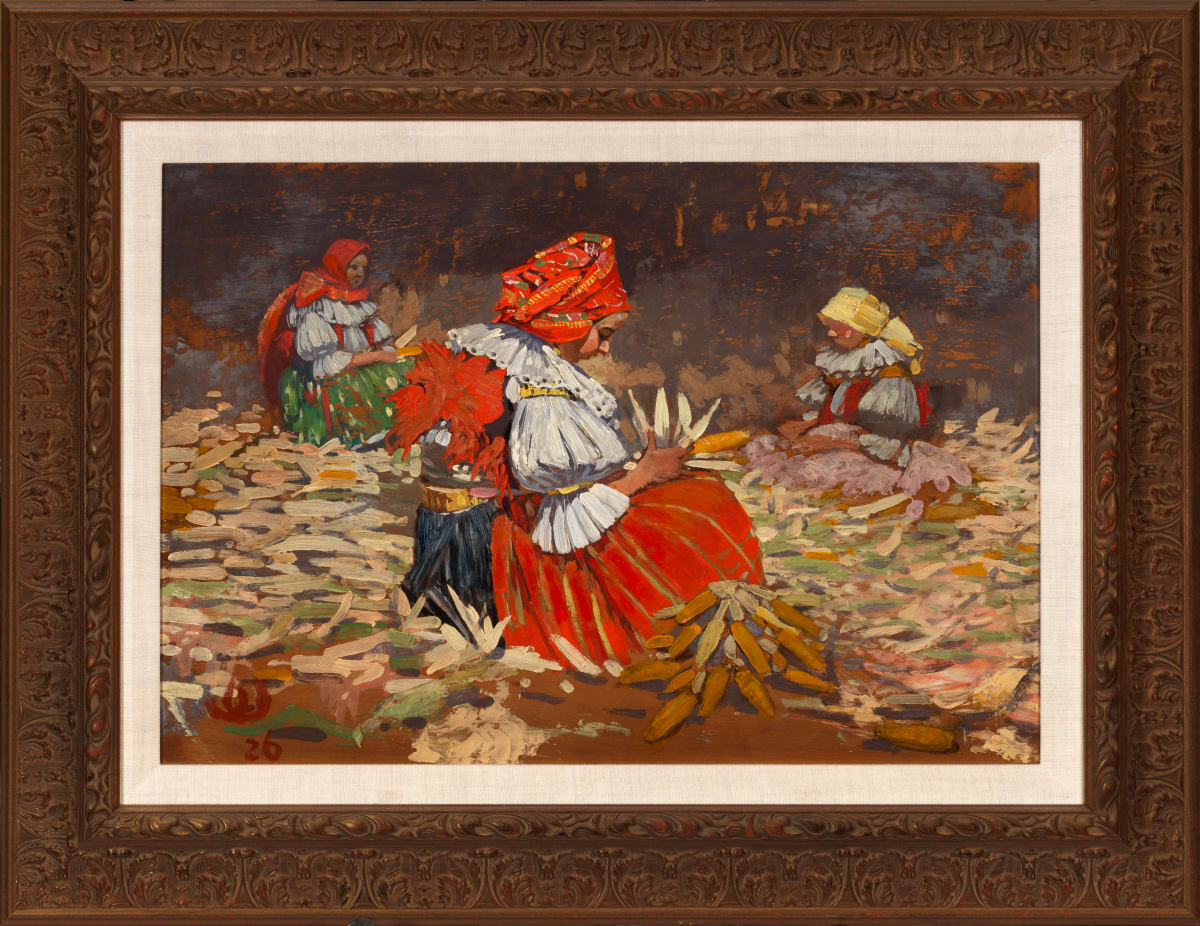
Uprka himself expressed his goal of representing the Moravian people:
“I worked my whole life not for fame and recognition
Not for money and other advantages
Not to out-do others
But only for the simple purpose
Of demonstrating that I am a full member
Of the community of people I sought
To capture as truly as possible through my art”
Aside from his notoriety at home, Uprka exhibited his work internationally, including the Paris Salon in 1894, and later in the United States at the Carnegie Institute in 1930. His popularity in his own time, however, stemmed not only from his success in exhibiting his work, but also through the wide circulation of his imagery on postcards. These reproductions made his vivid depictions of Moravian folk life accessible to a broader audience, solidifying his legacy as one of the foremost interpreters of Moravian culture. His work also drew the attention of the Nazi regime, leading to the theft of his work Jewish families.
Among the notable works, Drost discussed Testing the Horse at the Market (1890), which depicts men adding stones to a cart to test the horse’s strength prior to purchase. According to Drost, the painting reflects class and cultural tensions between rural Moravia and the people of Prague, or “Prazaks,” revealing Uprka’s awareness of social hierarchies that shaped regional identity. Drost also emphasized Uprka’s sketches and drawings, showing that he consistently returned to the scene of everyday life, and revealing his dedication to documenting the rituals and rhythms of the Moravian countryside and its people.
Ultimately, Uprka’s art reflects a unique dialogue between the traditional and the modern. His approach celebrates community, work, spirituality, and the enduring beauty of folk life during an era of industrial change.
Be sure to visit The Soul of Moravia: Joža Uprka Reprised, on view at the Petrik Gallery at the National Czech and Slovak Museum & Library until March 2026. To hear George Drost’s full lecture and learn more about the Uprka in America collection, visit the museum’s website below.