
In 1902, Auguste Rodin exhibited in Prague in one of his most extensive collections of work outside of France. Prepared by the Mánes Fine Arts Association, the exhibition was promoted all throughout the city and drew large numbers—although the exhibition was not profitable, it “influenced the entire generation of sculptors and ushered in a new era of Czech modern sculpture.”
Not only was his visit to Prague impactful, his brief time in Hroznová Lhota proved to be just as important for the Moravian people.
Personally invited by Joža Uprka and accompanied by other artists such as Alfons Mucha and Zdenka Braunerová, Rodin was greeted with staged displays of local Moravian culture, including villagers dressed in their kroje, accompanied by signing, dancing, a parade, and even horses adorned in the manner customary for the Ride of the Kings.
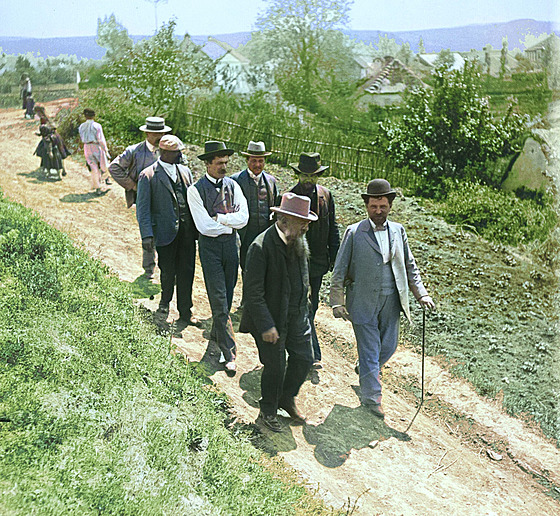
Photo colorized by Jan Benedik
Rodin reportedly delighted in the visit, immersed in a vivid performance of living folk culture. His presence as an internationally renowned artist carried particular significance for the Moravian people. A notable artist of the Parisian art world traveled beyond Prague—the modern, urban center—to a much smaller, rural village.
While his Prague exhibition was significant for Rodin in developing his international notoriety, the visit held special meaning for Moravia and for artists like Uprka. It suggested an emerging international artistic and cultural dialogue that crucially validated Czech modernism as it was taking shape.
Art historian Marta Filipová elaborates on this moment in her book Modernity, History, and Politics in Czech Art (New York : Routledge, 2019), noting one local observer who emphasized the importance of the exchange.
The French artists who served as models for aspiring students were now visiting their former pupils. This remark was referred directly to Uprka, who had spent a year studying among the French Impressionists. Filipová writes:
“such recognition of folk art and its ability to inform modern art was, in the eyes of the Czech participants of this episode, a significant step forward in the dialogue between the modern and the traditional in the Czech lands.”
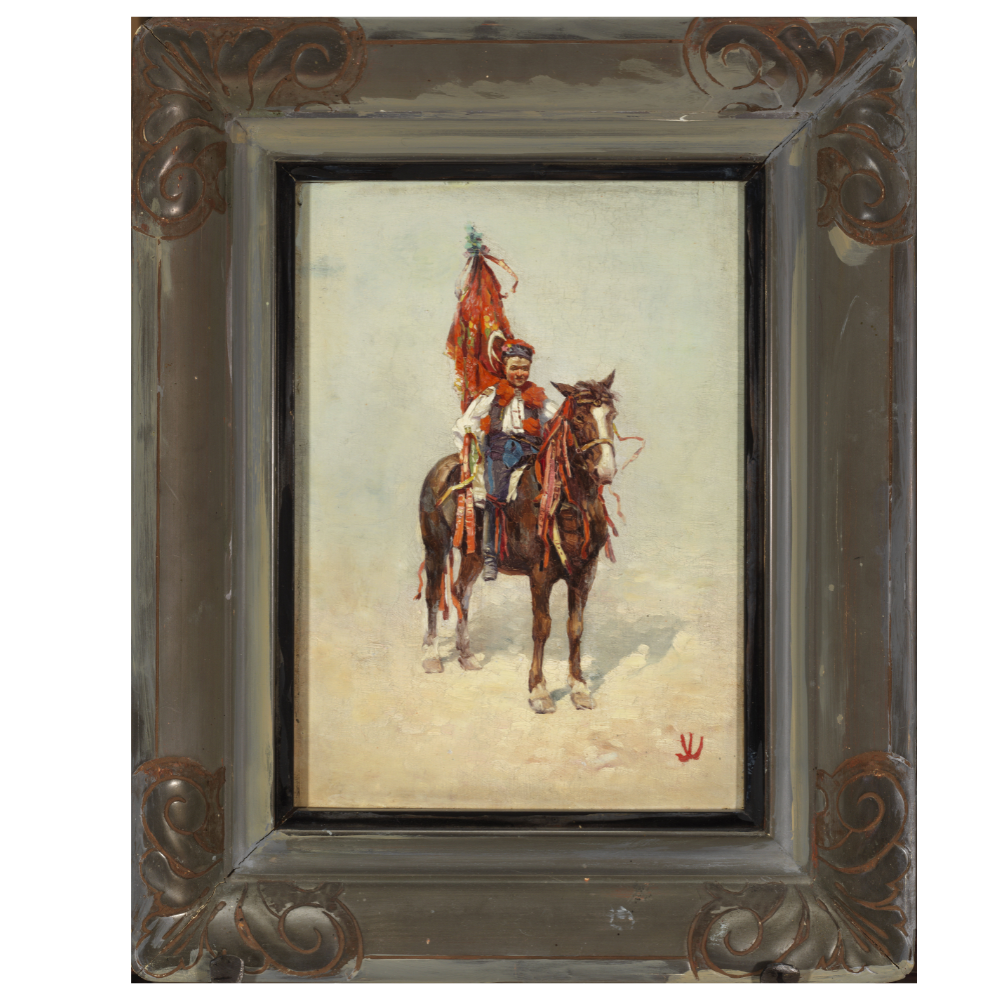
Villagers decorated their horses according to the Ride of the Kings, as the example above, to celebrate Rodin’s visit
Even villagers who may not have been familiar with Rodin’s artistic stature understood the importance of a French creator engaging so personally with local culture.
They extended generous hospitality, treating his visit as a celebration. Rather than scenes of everyday life, he was welcomed into a ceremonial display of Moravian identity. For Rodin, the idealized figures that inhabited Uprka’s paintings seemed to come to life before him.
Although Rodin had planned to visit the village of Kroměříž, the warmth of his reception in Hroznová Lhota proved irresistible. He remained there, reportedly dancing with the locals well into the night.
The significance of his visit continues to be emphasized today, with residents of the village reenacting the original parade in Rodin’s honor, on the 120th anniversary of his visit in 2022. Locals donned their traditional kroje, rode decorated horses, and even brought out period forms of transport such as Penny-Farthing bikes.
This ongoing commemoration underscores the lasting importance of cultural exchange and affirms the folkloric as a vital modern artistic subject—particularly at the turn of the twentieth century, when Czechoslovakia was in the process of defining itself as an independent nation apart from the Habsburg Austro-Hungarian monarchy. Today, the reenactment functions as a celebration of Moravian regional culture and a broader Czech national identity.