
As industrialization acclerated across Central Europe in the late nineteenth century, traditional folk dress, known as kroj, or kroje (pl), began to be rendered obsolete and started to disappear from everyday life. Mass-produced, functional clothing became more readily available.
Larger, more urban centers such as Prague saw the kroj fall out of use relatively quickly, while rural regions experienced a more gradual transition. Over time, the kroj was largely relegated to ceremonial contexts, including holidays, festivals, and rites of passage, which is still largely the case today.
It was precisely this moment of transition that compelled Joža Uprka to act. As traditional, folk garments faded from everyday use, Uprka set out to capture and historicize the folk costumes of the Moravian region, essentially creating a time capsule within his work.
With history frozen within the confines of his canvases, so are the social meanings embedded within them, giving viewers the opportunity to interpret the context behind the costumes.
De-coding the kroj
Those who are unfamiliar with the kroj today might not know that there is a manner to de-code the meaning of the garment–something that might be obvious to the wearer, and the region from which they come from. Different elements of the kroj speaks its own language, revealing where the wearer came from, their age, and most importantly, their marital status.
Headwear played a particularly crucial role in this visual language. Headdresses, scarves, and bonnets communicated information that would have been immediately obvious to local viewers. While Uprka occasionally make these distinctions explicit through his titles, much of the meaning in his work can be uncovered through visual interpretation.
Krojs had experienced shifts in their materials and overall look over the course of the seventeenth and eighteenth centuries, but by the turn of the nineteenth century, Turkish scarves, particularly those in the color red, had accrued immense popularity. Although the floral printed, Turkish scarves were gradually replacing the dominant lace styles, certain structural elements such as the shape, acted as markers of distinguishing unmarried from married women.
Girls and Unmarried Women
Young girls and unmarried women are often depicted flowers crowns, or wearing Turkish scarves in a range of colors, deviating from the more traditional red, which was commonly associated with married women. These scarves were typically worn directly over the hair rather than over a cap.
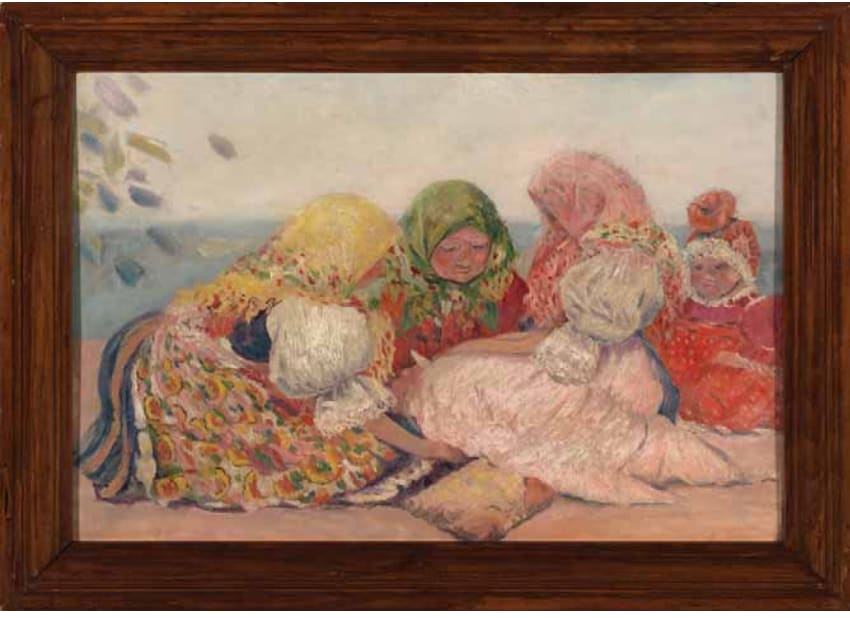
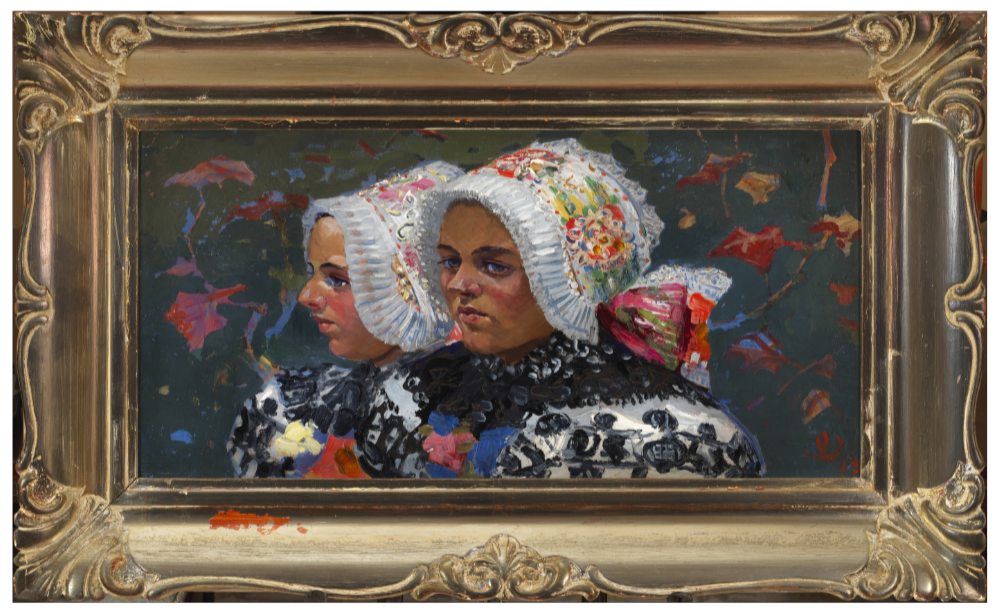
The girls here wear their scarves in the Hungarian manner, wrapped beneath their chin and tied behind their head, with any extra fabric flowing down their backs. This style was especially practical for young girls, who could adjust their scarves themselves if needed, as opposed to a more complex style wrapping techniques worn by older women and mothers. The scarves also functional in keeping young girls warm in the cooler autumn weather, and protecting their heads while working in the fields under the harsh sun.
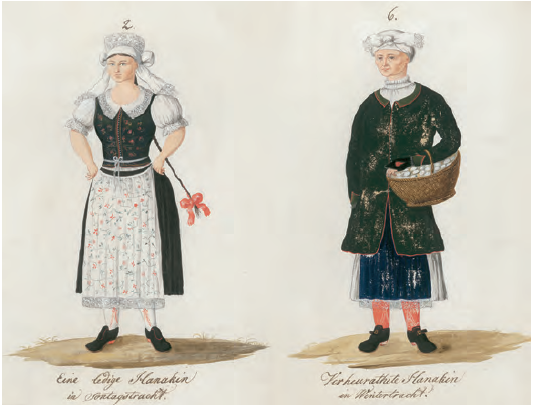
The image illustrates the differences between unmarried and married winter folk costume from the Haná region. Alena Křížová describes the shifts in folkloric costuming in Traditional Folk Culture in Moravia: Time and Space (Masaryk University, 2015) explaining:
“The unmarried girl’s veil is knotted together to make a bow and its ends fall down to the shoulders. The married woman’s veil is wound around her head and knotted above the brow. The veil was tied in this fashion for practical reasons at work. The young girl’s veil is more decorated, and embellished with a wide lace in the middle.”
Even as lace became less common at the turn of the nineteenth century, the silhouette and structure of headwear continued to signal marital status. This distinction remained identifiable, even as materials evolved.
Brides and Čepení
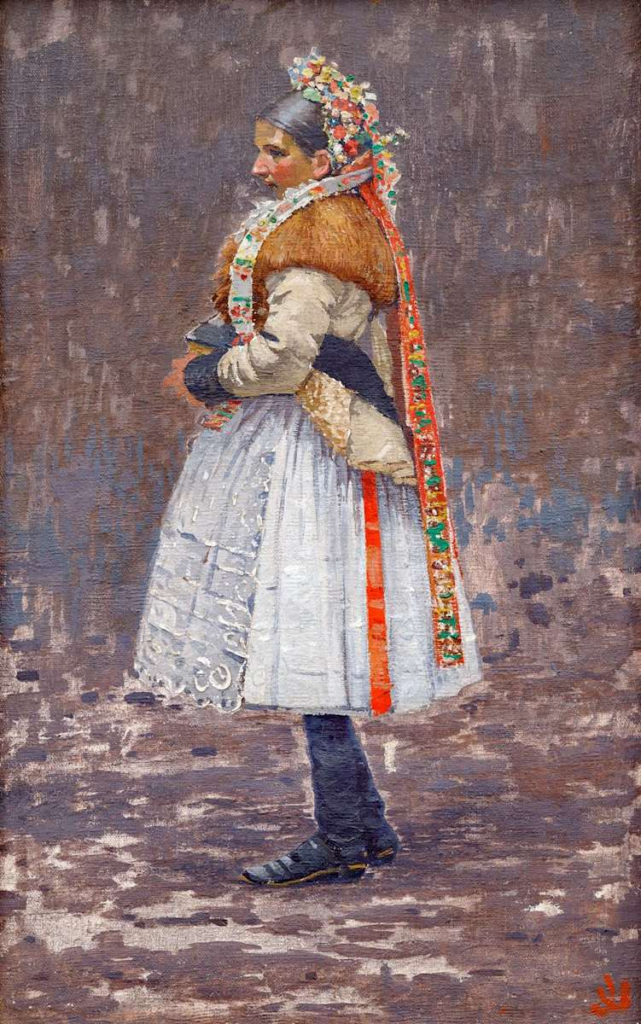
Like young girls, brides wore flower crowns and elaborate headpieces during their wedding ceremonies. This was followed by the čepení, or capping ceremony, a ritual that marked the transition from single to married life.
During the ceremony, the bride’s single braid was divided into two, wrapped around the crown of her head, and covered with a silk cap and a kerchief.
Peter Bogatyrev explains in his book The Functions of Folk Costume in Moravian Slovakia (De Gruyter Mouton, 1971):
“The cap which was placed on the woman’s head during the wedding ceremony brought fertility and good fortune in wedded life; a married woman who failed to wear it risked bringing on hail-storms or some other misfortune. Around Orechov a woman as old as seventy would be severely criticized if she failed to put on her cap, and other women would force her to resume wearing it.”
Read More: Tracing Joža Uprka: Must-Visit Art Destinations in the Czech Republic
The good fortune that was associated with wearing the cap meant that married women could be identified by their lace peeking out from under their scarves during everyday use.
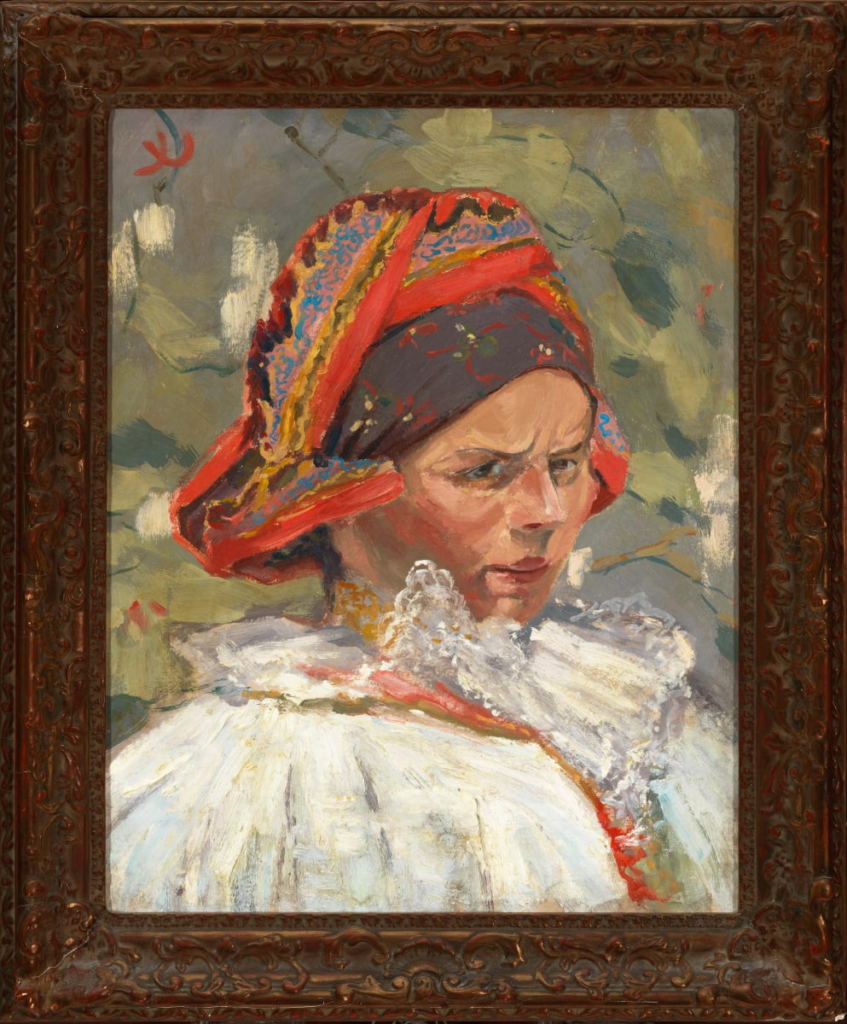
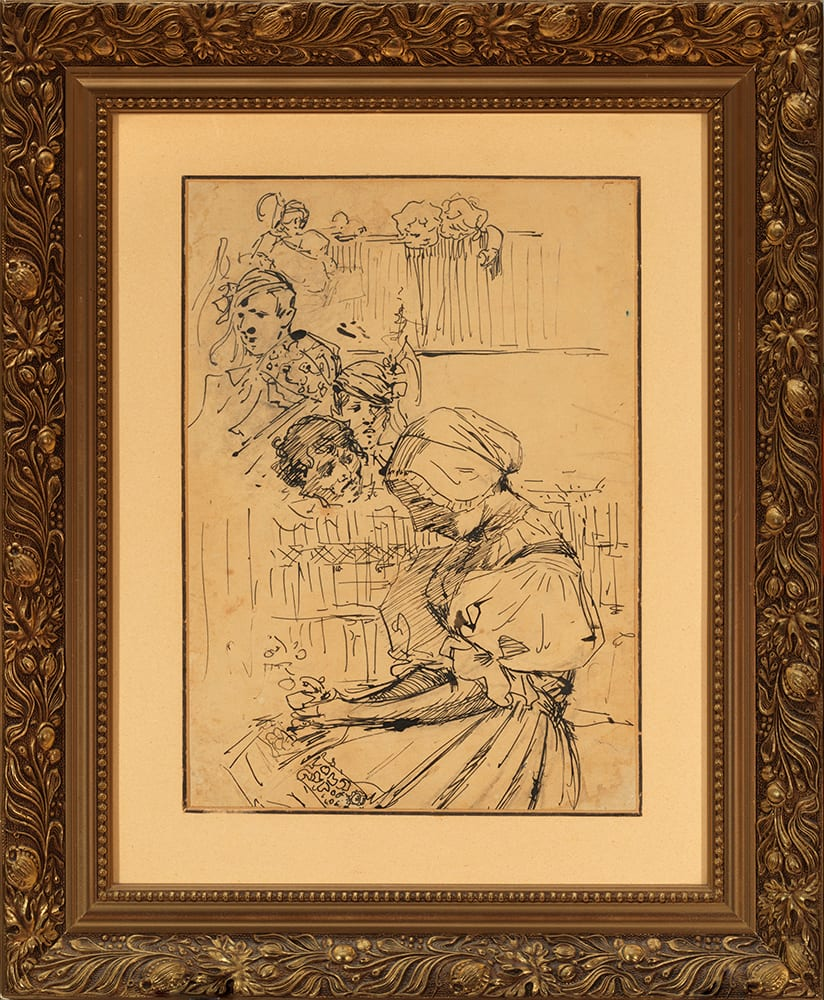
Uprka quickly sketches what looks like the end of a capping ceremony in Untitled (Wedding Joy), with guests looking at the bride at the front center of the piece. Rather than an elaborate headpiece, she dons a čepec, symbolizing the her transition into married life.
Married Women
In certain regions, women often transitioned to wearing silk caps, typically after several years of marriage or after the birth of her first child. They also functioned as markers of modesty and social maturity.
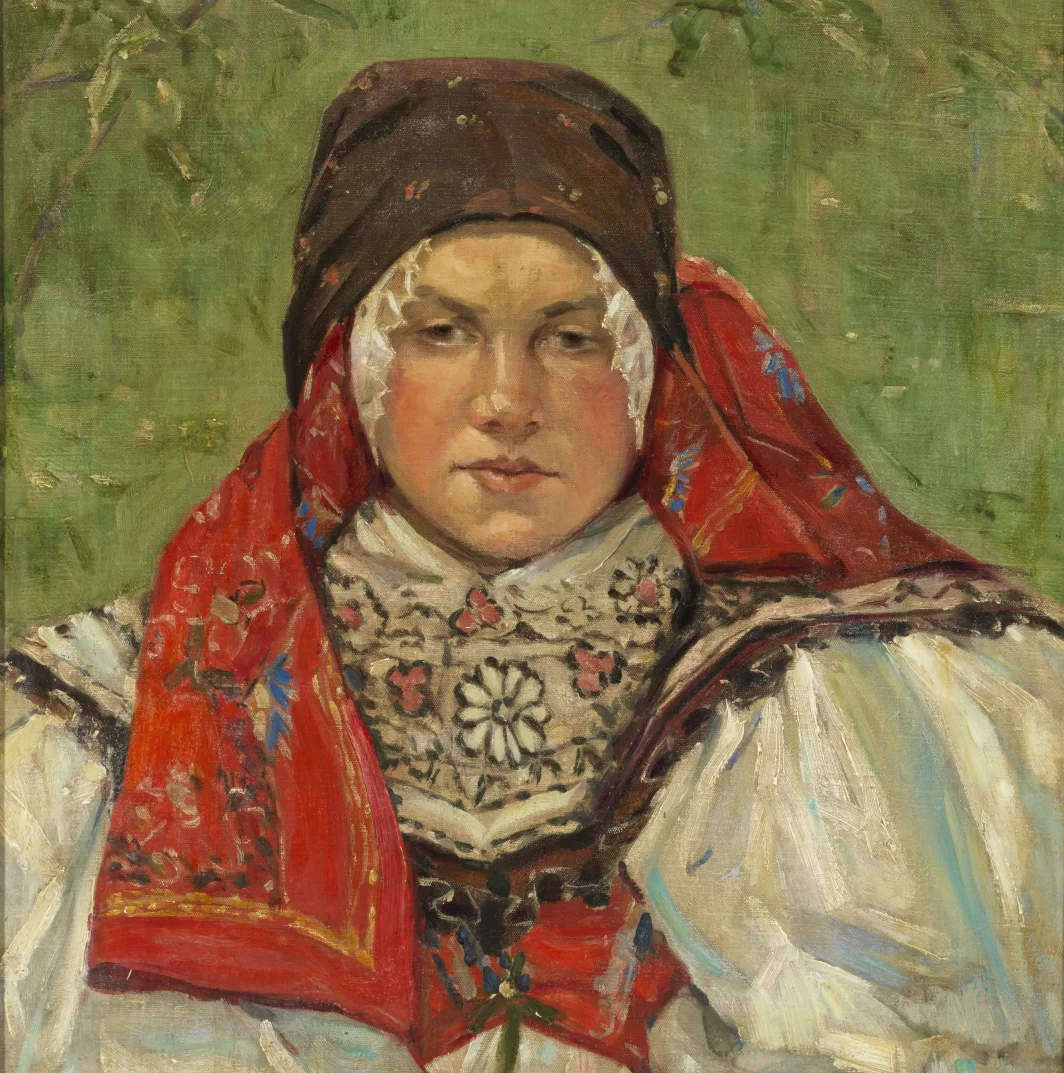
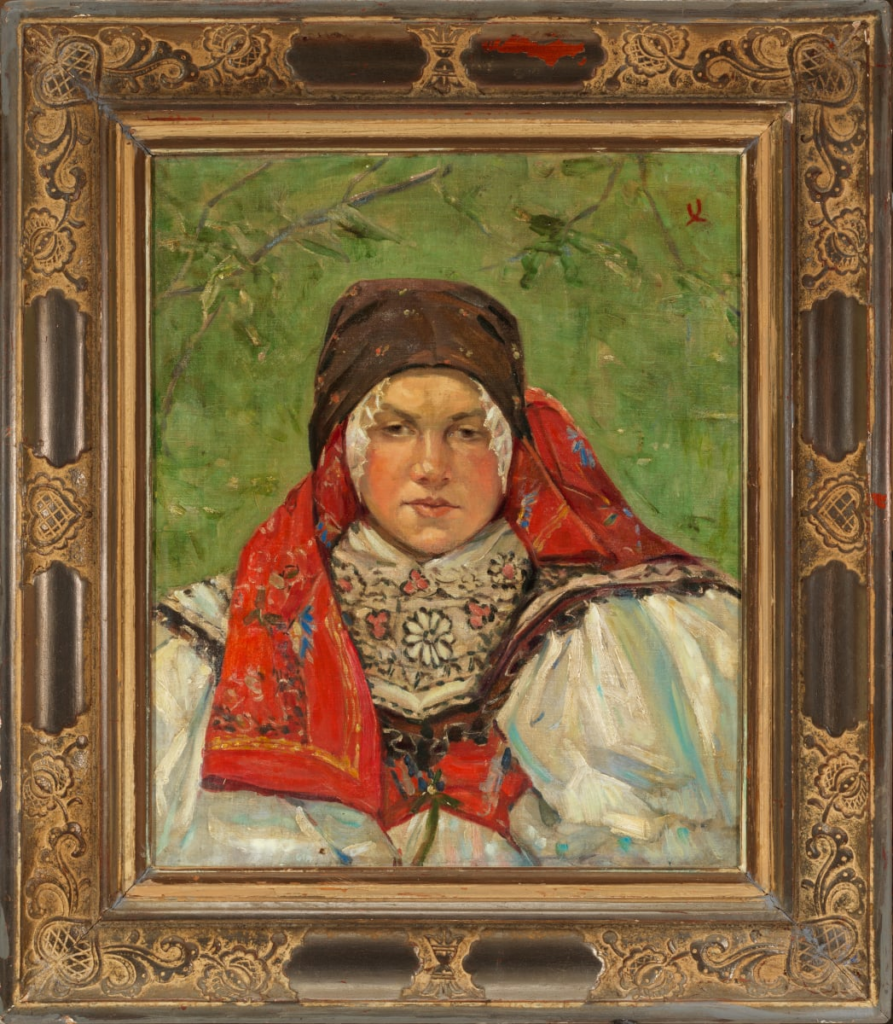
In Uprka’s Woman with Headscarf, silk cap is seen peeking out from under scarf, indicating that she has been married for some time, or is even a mother.
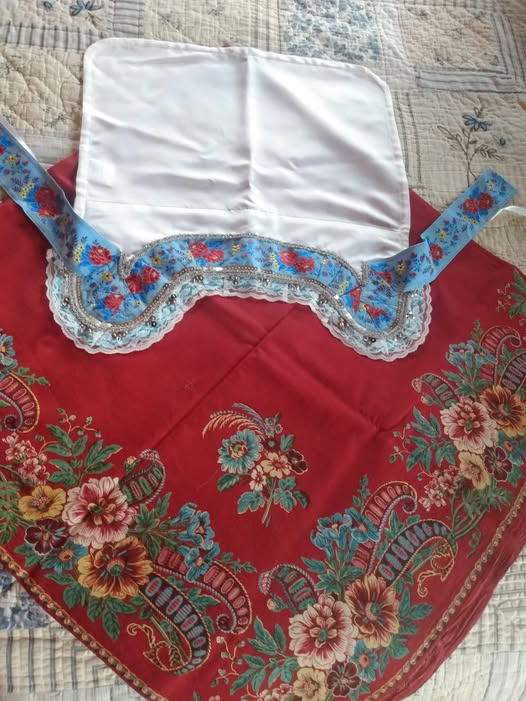
Kim Znamenacek, Nebraska Bohemians Facebook group, 2022
The manner in which scraves were tied were dependent mostly on the region in which they were worn, however it was much more common for married women to wear their scarves tied in a more elaborate manner leaving the shoulders free. The shorter style allowed for the women to work without their headpieces getting in the way, or strategically avoiding children from pulling them off their head.
Even as headpieces shifted over the course of the eighteenth and nineteenth centuries—moving from lace to scarves, from elaborate forms to more practical ones—the visual language of the kroj remained intact. To fully understand these garments one must read the kroj as a whole, noticing the regional variations that depict age, marital, and social status. No single element can tell the entire story. Headpieces, however, offer a compelling point of entry. They are often the most immediately legible markers of identity, guiding the viewer toward a deeper understanding of who the wearer might be, where she comes from, and how her traditions were adapted.